Wednesday, December 23, 2009
Stollen
 Christmas marks the beginning of the summer holiday period in New Zealand. This confounds many a visitor to the Southern Hemisphere. Many New Zealanders celebrate that which makes our Christmas so different to our Northern Hemisphere friends on the planet - there are amusing images of Santa wearing shorts and sporting a tan, reindeer wearing sunglasses, and kiwis on deck chairs knocking back beer...The New Zealand Christmas is one of barbecues, high sun and beaches.
That aside, there is one thing that does hold us back from totally embracing a distinct identity for noel. Our history is partly formed by colonisation of the English, Scottish and French. Many New Zealanders are but a few generations removed from Europe, thus the cultural ties are not totally severed or subverted. My good friend, the intellectually-ferocious and generous Anita, is an Australian of German descent; she and I are in the same boat when it comes to reconciling the amazing Christmas baking of the north with our southern humidity. Anita's grandparents have been kind to share their recipe for stollen.
Stollen is a fruit cake that is made either with cheese or yeast. As we could not find quark, we opted for a mix of cream cheese and ricotta.
Stollen
(by way of German tradition, care of Oma and Opa in Australia)
For the cake:
3 1/3 cups all-purpose flour
8g baking powder
3/4 cups sugar
9g vanilla sugar
4 drops almond flavouring
1/3 cup rum
2 eggs
120g butter, cold
1 1/4 cups combination of cream cheese and ricotta or quark
2 cups dried fruit, such as currants and raisins, macerated in rum for 48 hours
1 1/2 cups ground almonds
3/4 cup citrus peel
250g marzipan, rolled out into two rope-like lengths
For the icing:
1/4 cup melted butter
1/2 cup sifted icing/confectioners' sugar
1) Preheat oven to 160 C/320 F.
2) Into a large bowl, sift together all-purpose flour and baking powder.
3) Add sugars, almond flavouring, run and eggs into flour mixture so that it is combined, then cut in butter until a paste-like substance is formed.
4) Knead cheeses, fruit, ground almonds and citrus peel into paste to make a smooth dough.
5) Separate into two logs. Open each log to place marzipan in the middle, then cover over again so that marzipan is wholly enclosed.
6) Place both loaves on a sheet pan lined with parchment paper.
7) Bake for 50-60 minutes until golden.
8) Once baked, brush loaves with melted butter and sprinkle over with icing sugar.
Do not be afraid to use ALL of the icing sugar. If you are going save the stollen to eat at a later time (which is wise, for it does mature), the icing sugar will be absorbed by the butter, creating a light, delectable icing. To save for later, wrap in foil, then in cling-film and store in a cupboard.
 The interesting thing about stollen is that it does not use any mixed spices at all, which is quite traditional in British Christmas fare. However, it does taste of Christmas - dense, dark fruit and nutty almond flavours throughout. The stollen is light in texture yet rich in flavour. I prefer to eat it as it is, but it is also quite acceptable to eat it toasted with jam or other fruit preserves.
 Merry Christmas everyone!!
Labels: Cake, Christmas, German, Holidays, Summer


Sunday, November 29, 2009
Golden Onion Pie
 Thanksgiving is a beautiful time of the year in the United States. Leaves on deciduous trees have truly turned and have all but given way to winter, biting winds require an extra layer or two, and candlelight beaming through foggy windows signal welcome and comfort. These are the images I have of my many Thanksgiving celebrations in southern California with my angelheart Eric, our family and dearest friends. Now that we live in my home country, New Zealand, we have to adapt the tradition to our antipodean lifestyle. This year, it has got off to a quiet start - just a light summery dinner. Even so, it was important we acknowledged this special time for sharing and gathering in between calls to family.
Of course, we recollected the many great meals we've had at this time of year, not all of which we made ourselves - our family and friends are really good cooks. This really put us in the mood to think about how else we could make a culinary nod to the US over the weekend. Unfortuntely, one of our sources for inspiration, Gourmet magazine, published its last issue this month. (There's no coverage of that in the magazine itself, so I'm not sure if this is a graceful note on which to leave the publishing world, or if the plug was suddenly pulled.) We turned to this final issue for guidance and came up with Golden Onion Pie.
Gourmet writers added a twist to Zwiebelkuchen, which is a German yeasted dough onto which is cooked steamed onions, bacon and caraway seeds. Instead of a plank of dough, this twist is a pie-like creation, sweet with caramelised onions, tamed with sour cream, though I added yoghurt and a bit of cream instead.
Epicurious has a catalogue of all Gourmet's recipes now, so it is not lost forever. The recipe for Golden Onion Pie can be found here.
 We swapped out one brown onion for a red one to underscore our nod to fall in the US, the beautiful mingling of bronze and red. The dough is very easy to work with and can be left overnight, whether covered in a lightly oiled bowl or covered and lightly dusted with flour to slowly rise in the fridge. It stretches well and behaves very well - it also helps that it is muggy here in Auckland, so we didn't have to worry so much about draughts. Overall, the pie is sweet and substantial, symbolic, really, of Thanksgiving (putting aside the difficult task of reconciling the joy of finding a new home and the crimes committed on which successful colonisation was dependent). This was our mellow way of giving thanks, to finding each other, to being together, to having healthy family and friends, to having shared many a lovely memory.
The only bitter note, for us, is that we could not celebrate with family and friends in the States. At least we were able to build on the tradition of turning to Gourmet, even if it will now be absent from magazine racks all over the world - I only hope, of course, that the many talented contributors find worthwhile enterprises through which they can share their cooking talents and views on food trends and food politics.
Happy Thanksgiving!
Labels: Gourmet, Holidays, Onions, Pie, Thanksgiving
Saturday, January 03, 2009
The New Year: Croque Monsieur Bake and Cheescake
 It can be a bit of an effort to approach the statutory holidays of the new year with the same vigour one has on a workday morning, unless, of course, one is hosting friends and/or family for brunch and mimosas. I did not play host-like roles for any festivities pre or post-New Year's Day, for I knew that I would have too much of a good thing at the home of good friends' the night before (being hosted is always such a treat), and I did. But one must eat after such an evening, and in such a haze, needing sustenance for the day and others to come (festivities are known to continue through January 1), I often turn to eggs or bread, sometimes in combination.
A personal favourite at the start of any weekend or holiday morning is eggs benedict or croque monsieur. The former is more fiddly than the latter, requiring a hollandaise sauce to be made, so the decision to make croque monsieur was a simple one. Croque monsieur is the ultimate in simple Parisian snack food, for it is quite plainly a toasted ham and cheese sandwich (a croque madame is topped with a fried egg). As is particularly true for recipes that need but the fewest ingredients, the better the quality of bread, ham and cheese, the more satisfying the result. Your only choice for cheese is one between emmental and gruyère, both of which melt under the merest heat: emmental (or Swiss cheese, as it is known in New Zealand, Australia and North America) is a hard cheese of cow's milk that is nutty and slightly acidic; gruyère is made from cow's milk and is sweet but slightly salty (overall imparting a somewhat mineral quality to a dish). Both cheeses complement ham's salty notes.
Perhaps she did not have in mind those deservedly inflicted with a hangover, but Nigella Lawson's recipe for Croque Monsieur Bake is ingenious - everything is prepared the night before, so all one has to do is pre-heat an oven before throwing the waiting ingredients into it.
Croque Monsieur Bake
(from Nigella Lawson's Nigella Express)
6 slices light rye bread
75g Dijon mustard
6 slices and 4 tablespoons grated gruyère cheese
6 thin slices of ham
6 eggs
1 teaspoon salt
80ml/3 fl. oz milk
1) Make sandwiches in the traditional manner: spread each slice of bread with mustard, in between each sandwich go the cheese and ham. Cut in half, either straight down or on the diagonal.
2) Press sandwich halves snuggly into a baking dish.
3) In a bowl, whisk together the eggs, salt and milk.
4) Pour liquid over the sandwiches.
5) Cover with clingfilm and keep in the refrigerator overnight.
6) In the morning, preheat your oven to 200 C/400 F.
7) Remove baking dish from the fridge, dispose of the clingfilm, and sprinkle grated cheese over the top (along with a sprinling of Worcestershire sauce, if desired).
8) Bake in the oven for 25 minutes, by which time the egg will have cooked, the bread will have browned, and the cheese will have melted.
This is a great no-fuss way to start any morning, especially one in which stodgy food is a necessity to give one's stomach fortitude after the previous night's/early morning's boozing. Quite rich, there is easily enough to satisfy 4-6.
Later in the day, one might turn one's mind to something slightly sweet. This is not the right moment to go into the grand subject of The Mighty Cheesecake (we have hangovers and are suffering from the inevitable exhaustion that follows the rush to complete business before Christmas, remember?), on which many a book and treatise has been written; however, I will assert my general preference for baked cheesecakes in the style of Central and Eastern Europeans crossed with the Commonwealth and North American enjoyment of a biscuit base. In New Zealand we neither cook nor bake cheesecakes (generally), and often serve them with fruit atop or woven through. I dispense of the fruit, bake the cheesecake and always have a spicy biscuit base.
The following receipe is suitable for a 24cm/9" springform pan. Feel free to use your preferred cookies for the base. I like digestive biscuits, semi-sweet cookies made with wholemeal flour. When in the US, I use graham crackers as they are easier to find when I am not in the mood to make my own digestive biscuits - also, they are the closest approximation to digestive biscuits.
Cheesecake
For the base:
250g digestive biscuits, pulverised to fine crumbs
1/2 cup unsalted butter, melted
1/4 cup sugar
1/2 teaspoon ginger
1/2 teasponn cinnamon
1) Mix all ingredients together.
2) Press evenly into a springform pan, allowing it to come up the sides to form a shell around the cheesecake filling.
3) Place in the refrigerator for 30 minutes.
For the filling:
500g/1 lb cream cheese
1 tablespoon flour
1/2 cup sugar
4 eggs, separated
1/2 cup cream
2 teaspoons vanilla extract
1/4 teaspoon salt
1) In a bowl, beat the cream cheese until it is soft.
2) Add flour and sugar, mix well.
3) Add the egg yolks, cream and vanilla extract, mix well.
4) In a separate bowl, combine egg whites and sugar until soft peaks are formed.
5) Fold egg whites into cream cheese mixture.
To complete:
biscuit base, as above,
filling, as above
3/4 cup sour cream
1/2 teaspoon vanilla bean paste (or vanilla extract)
1) Pre-heat oven to 200 C/400 F.
2) Pour filling into biscuit base.
3) Place springform pan into a roasting pan, add hot water, which is to come halfway-up the side of the springform pan (do not get any water into the cheesecake). Creating a bain marie prevents overcooking and keeps the cheesecake from rising and falling too dramatically, creating a smoother, more even-looking cheesecake.
4) Bake for 50 minutes.
5) While the cheesecake is baking, combine sour cream and vanilla extract.
6) Take cheesecake out of oven, spread sour cream mixture over surface of the cheesecake.
7) Bake for a further 10 minutes.
 The addition of sour cream to the top (as opposed to folding it into the cream cheese itself) creates a foil to the richness of the cheesecake filling by supplying an overt tangy quality to it. I have a great love of sweet-sour combinations - this addition is also quite popular in the American northeast. I suppose this also acts as a metaphor for the year - to enjoy and accept the fullness and happiness of life, whilst also weathering its tangy, sour moments with as much grace as possible.
Today's results look quite spartan, and this is not without intention. This is a new year, after all. It is best to look forward, with renewed pleasure for life, learned from the previous year's experiences. This is going to be a great year for me, if for no other reason that for the fact that my angelheart Eric is moving to New Zealand.
Happy New Year!
Labels: Cheesecake, Croque Monsieur Bake, Holidays, New Year, Nigella Lawson, Summer
Sunday, January 13, 2008
Braised Lentils
 My angelheart Eric and I welcomed in last year with a very simple yet rich lunch of Alaskan Colossal Crab Legs and Eggs Benedict. It made a nice change to dashing around to attend this, that and the other breakfast-brunch-lunch and sipping mimosas (which along with Bloody Marys seem to be the favoured brunch drinks in Southern California). This year, I couldn't even tell you what I ate on New Year's Day. No, I wasn't hungover; I just wasn't in the mood to mark the occasion. I simply ate (maybe a bulgur wheat salad?) and saw the day through. Perhaps the funk rested in the apprehension of the year to come - so many changes, all of which are exciting and nerve-wracking. I have finally decided that it is time to officially accept that the new year has begun, so now I must embrace the changes to come and get on with the show.
I have decided to start with adapting an approach to dish design that I read about in Skye Gyngell's seasonal celebration, A Year In My Kitchen. She has created for her restaurant menu a series of culinary accents that she uses to complement and round out her dishes: a "Culinary Toolbox". The items sit like notes on a scale, from woody herbs at the low end, bright herbs at the top, to agra-dolce (the sweet-sour application in Italian cookery), which sits in the middle. On the low end of the scale also sit Skye Gyngell's staple of Braised Lentils.
Lentils are legumes that develop an earthy and rich flavour when cooked. Making lentils is a fitting way to start my posts for 2008, for many cultures use them as symbolic representations of the year they hope to come. Shaped like a coin, lentils suggest prosperity; circular, they are a symbol of new beginnings and good luck. The most known of new year's dishes is Italy's cotechino con lenticchie - pork sausage and lentils.
Before embarking on any lentil recipe, first tip the amount of lentils you are going to use for your dish onto a baking tray or other flat container. Thus in a single layer, it is easier for you to sort through the lentils for any small stones, fibres and discoloured or misshapen lentils. Place the lentils into a colander or sieve and run cold water through them. For braising, you will need whole lentils, so Puy (sometimes called "French lentils" in New Zealand) or Castelluccio are best - you need them to be cooked through but retain their bite. Red, brown or yellow split lentils will quickly turn mushy; consequently, they are used for soup dishes.
Braised Lentils
(largely adapted from Skye Gyngell's A Year In My Kitchen)
345g/12oz Puy lentils
1 onion, peeled and quartered
1 carrot, peeled and cut into three chunks
1 red chilli, left whole
3 small cloves of garlic, peeled and left whole (use 2 if the cloves are large)
2-3cm/0.7-1" fresh root ginger, peeled (made easy with a teaspoon) and left whole
5 sprigs of parsley
3 bay leaves, fresh
1 tablespoon red wine vinegar
1 1/2 tablespoons soy sauce
2 tablespoons sesame oil
1) Rinse lentils and place in a deep saucepan with all ingredients except the vinegar, tamari or soy and oil.
2) Add enough water to completely cover lentils and bring to the boil over a medium heat. Over too a high heat, the gentle flavourings of all the elements will not be encouraged to be extracted; instead they will be shocked.
3) Lower heat and simmer until lentils are cooked but still retain a bite, approximately 20 minutes.
4) Remove from heat, drain in a colander and tip lentils into a bowl.
5) While still warm, dress lentils with the vinegar, soy and oil.
6) Once cooled, the lentils can stored in an air-tight container in the fridge for up to one week. Bring them to room temperature before using.
 The Braised Lentils are to be used when required. They can be scattered over a dish to lend depth and nuttiness when such elements are otherwise missing, or to complement other nutty elements of a different texture. You could also use the lentils as a base onto which you set the rest of the dish, as Skye Gyngell does with pan-roasted chicken supremes (breast with wing still attached), basil oil, slow-roasted tomatoes, topped with aioli.
 There are other elements of Skye Gyngell's culinary toolbox, all are items which can be stored for a few days or up to one week. I think this is a good idea for the home cook, like myself, to "finish" or "dress" meals for the home cook. I'm excited to have tried this, and though I'm sure to tweak it further to serve as my own nutty and earthy low-note, the concept is inspiring. I wonder what other seasonal toolbox items I will create throughout the year to have on hand in the kitchen?
I thank Pille of Nami-Nami for recommending A Year In My Kitchen to me as a comforting and inspiring read during a particularly hard time of writing my thesis.

Labels: Holidays, Lentils, New Year, Skye Gyngell
Friday, November 23, 2007
Pear Crisp
 It is Thanksgiving in the United States of America, my second home. My angelheart Eric returned to LA yesterday after a heavenly 8-day sojourn in New Zealand, which was far too short. Although terribly depressed, as anyone is when apart from his or her most loved one, I am thankful that he was able to come over and spend some time with me, for it may not be months now until we next see each other.
As is typical in a state of sadness, I felt the need to bake. I also wanted to contribute something to the Thanksgiving table. Of course, we don't have cans of pumpkin purée lining our supermarket shelves in New Zealand - at least, not typically - and butternut squash is not in season, so I couldn't make any purée for myself. I headed to the market for other American favourites in the Autumn: pears and pecan nuts.
I first had pecans by way of the infamous Southern delight: pecan pie. Pandoro Panetteria in Parnell (on the inner-city fringe of Auckland) used to make a nutty and sweet pecan pie. I adored its custard filling made with both brown and white sugar. I say this in past tense because I haven't had one for years and don't know if they still make it. I should stop by. It is criminal that I never had one in all of my years (and Thanksgivings) in the USA - or, at least, I didn't have one that I remember.
I do like pecans a great deal, though. I love their oval shape and the ridges cracked into their maple-to-deep brown skin. Pecans are rich in flavour, particularly of butter, which is perfectly heightened with any recipe that involves melted or brown butter. Storing them isn't terribly difficult. According to the National Center for Home Food Preservation, shelled pecans should be refrigerated or frozen. They need to be kept away from air and light as they have a high oil content; exposure to heat will quickly make the pecan's natural oil go rancid.
Thanksgiving is a time of year that is associated with all things richly hued. This is the season in which I never seem to tire of the clichés that are presented in store fronts or on magazine covers, where everything is brown, orange and burnt red. Deep in a sepia haze, one can be forgiven for wondering what it's like to see "normal" again. Of course, I don't find it suffocating or overwhelming because I don't have the cultural associations that go along with it, whether it be dealing with the emotions caused by family hysteria or by a post-colonial reality. But bring it on: roasted squash, braised mustard greens, carrot puree, fennel gratin, roast turkey (first brined then stuffed with citrus), toffee apples, maple ice cream, brown butter sauce, dark cups of coffee, pumpkin pie, and, of course, all the nuts of the fall: hazelnuts, chestnuts, and pecans...
Pear Crisp
(Adapted from the Brown-Sugar Apple Cake recipe in Martha Stewart Living, October 2006)
95 1/2g (3 1/3oz) butter, melted
2 medium pears (I used Bosc), approximately 2/3 kg (1 1/2lb)
1/4 teaspoon ground cinnamon
1/4 teaspoon ground nutmeg
1 tablespoon granulated sugar
2/3 cup brown sugar, any colour depending on desired depth of flavour
2/3 cup all-purpose flour
1/2 teaspoon salt
1 egg, lightly beaten
2/3 cup pecans, toasted and coarsely chopped
1) Preheat oven to 180 C (350 F).
2) Butter a loaf pan. Mine measures 22 x 13cm (8 1/2 x 5").
3) Peel, core and cut pears into 1cm (> 1/3" but < 1/2") slices. You can dice them, if you prefer a neater presentation when the crisp is inverted after the initial cooling period once baked.
4) Add sliced pears to a medium bowl and toss them with the cinnamon, nutmeg and granulated sugar.
5) Spread the spicy pear slices on the bottom of the loaf pan.
6) In a large bowl, whisk together the brown sugar, flour and salt.
7) Add the egg and butter and whisk until just combined.
8) Stir in the pecans.
9) Pour batter over the spicy pear slices.
10) Bake until the top is a maple brown and a skewer comes out clean, approximately 35 minutes. I checked after 25 minutes and poured out any excess butter that was bubbling on top.
11) Let cool slightly on a rack.
12) Use a knife around the edges of the loaf pan to loosen and invert.
13) Cut into squares or cut across into slices.
 The base is chewy and redolent of the butteriness imparted by the pecans, the toasted pieces of which full each mouthful with warmth. The soft slices of pear are spicy in the most comforting of ways - What would Thanksgiving be without spices?
 To my angelheart Eric and all my wonderful American friends:
Happy Thanksgiving!
Labels: Afternoon Tea, Crisp, Holidays, Martha Stewart, Pear, Thanksgiving
Friday, June 08, 2007
Hot Cross Buns
 I cannot tell you how much I look forward to Easter every year only so I can eat these sweet buns. Even as a child I would choose to eat these over chocolate. Although there are many good commercial versions around, they are "seasonal", and I have eaten all the bags of buns I froze (!).
 I cannot wait until Easter next year to have them again, so I decided to make my own, tradition be damned.
I am purposefully dipping into the Nigella pool this month, having long had all of her books but not made enough use of them. My source for hot cross buns is La Lawson's Feast: Food That Celebrates Life, a fabulous and densely-packed cookery book that covers appropriate dishes for festive celebrations, traditional, sentimental, and in-between. I only veered from her list of ingredients three times: I couldn't locate cardamom pods before making the buns, so I decided to forego them as an ingredient altogether (I have since found them!); in place of bread flour, which Ms. Lawson insists upon, I used all-purpose flour, adding an extra tablespoon per cup for the extra gluten; and I substituted icing sugar for superfine sugar.
Hot Cross Buns
(from Nigella Lawson's Feast: Food That Celebrates Life
For the dough:
2/3 cup milk
57g/2oz butter
zest of an orange
1 clove
3 cups and 3 tablespoons all-purpose flour (or 3 cups bread flour)
7.5g/1/4oz active dry yeast
3/4 cup mixed dried fruit (I used apple, pineapple, sultanas, apricot, and peach)
1 teaspoon ground cinnamon
1/2 teaspoon nutmeg, freshly grated
1/4 teaspoon ground ginger
1 egg
For the crosses:
3 tablespoons all-purpose flour
1/2 tablespoon icing sugar
2 tablespoons water
For the glaze:
1 tablespoon icing sugar
1 tablespoon boiling water
The procedure seems long but no step is very difficult, unless you're a wuss when it comes to kneading (in which case I hope you have an electric mixer with a dough hook):
1) Heat the milk, butter, orange zest, and clove (and three split cardamom pods, if using) until scalding point. Take off the heat, cover, and leave to infuse. 2) Dump into a bowl and mix together the flour, yeast, dried fruit and spices, and stir together.
3) When the aromatic milk has cooled down to 37 C/98.6 F, take out the clove (and cardamom pods), beat in the egg, then mix into the dry ingredients.
4) On a floured surface knead the dough by hand, or in an electric mixer, knead with a dough hook. Stop when the dough is silky and like elastic, though it will not be entirely smooth because of the dried fruit (Ms. Lawson's logical input).
5) Form dough into a ball, then place it in a buttered bowl. You can cover it with cling-film and pop it in the fridge over night, or you can cover it with a kitchen towel and leave in a warm place for 1 - 1 1/2 hours.
6) Bring dough to room temperature if removing it from fridge.
7) Punch down the dough and knead on a floured surface until smooth and elastic, as before.
8) Make around sixteen buns. I did this by dividing the dough first into halves, each half into half again (quarters), then each quarter into half once more (eighths), and finally each eighth in half (sixteenths). Sorry for the lame math, but it is easier than figuring it out one-by-one and the resulting size of each ball is more or less equivalent.
9) Snugly fit the buns on a baking tray covered with parchment paper.
10) Preheat oven to 200 C/425 F.
11) With the back of knife, imprint a cross on each bun, cover with a kitchen towel, and leave to prove for 45 minutes.
12) Make an egg wash and brush the buns with it.
To make the crosses:
1) Make a smooth and thick paste by mixing together the flour, sugar, and water in a small bowl.
2) Use a spoon to dribble the paste into the cross-shaped indentations on the buns.
Bake the buns for 15-20 minutes. To ensure buns are baked, pierce a skewer or toothpick into the centre of a chosen bun, and if it comes out clean, the baking is done. The buns should be fragrant by then (the nose knows...).
To make the glaze:
1) Mix icing sugar and boiling water together, ensuring a smooth consistency.
2) Brush onto the hot buns, rendering them glossy and sweeter.
 You cannot beat the aroma that comes out of the oven. The fluffy interior is alive with spicy, sweet goodness (the hint of ginger is always dizzying to me). They are incredible once cooled and reheated in the microwave, for they are more easily halved to be spread with the jam or preserves of your choice, but they are just amazing slathered with butter or eaten plain (as I often have them). After a few more attempts, my hot cross buns will look perfect for Easter 2008!
Labels: Bread, Buns, Easter, Holidays, Hot Cross Buns, Nigella Lawson
Monday, January 01, 2007
Alaskan Colossal Sea Crab and Eggs Benedict
 Happy New Year!
For most westerners, New Year's Day is usually the day in which the point is to rid oneself of his or her hangover. Following that, one usually commits to fulfilling as many of the new year's resolutions made the night before as possible. Remarkably, the fridge is cleaned, the dirty laundry is off the floor, the blinds are dusted...And that's usually where the enthusiasm for the do-good resolutions ends - if not then, certainly within a couple of weeks thereafter. This year I decided not to make any resolutions. In fact, if anything, my angelheart Eric and I had a lunch of utter decadence to celebrate this New Year's Day, the diametric opposite to what the beginning of the new year is for most people: diets and exercise. Truthfully, I do enough exercise for me (yoga four times a week), and though I do not always eat sensibly, I do not usually overeat except on occasions (not the orthodox ones, mind you; usually, the occasions are "because I feel like it", "you're not the boss of me", and "I've been good all week").
Today's special lunch, laissez-faire table-setting aside, was all for the occasion of "because we feel like it". We rarely spend the first day of the new year on our own, so it was a real treat to leisurely play in the kitchen together.
The Alaskan Colossal Sea Crab has the biggest legs you ever did see on a crab with very sweet and substantial meat, which is usually best dipped into a hot sauce or a melted compound butter (ours had chopped parsley). Simply, one need do no more than boil the legs in salted water with half a lemon for approximately 10 minutes.
As for the eggs benedict, they have always been a favorite start to the morning for me. I had never made them before today, but I wanted them anyway. I'm sure no one needs a recipe for these, but I consulted Nigella Lawson's How To Eat for her hollandaise sauce, adjusted the recipe for two, and made the sauce accordingly. I love hollandaise for both its sharpness and richness, but it is fairly flexible in that you can use more or less lemon juice according to your own penchant or dislike for a citrus spike.
Hollandaise Sauce
(from Nigella Lawson's How To Eat)
1 stick of butter (113 grams), cubed
2 egg yolks
juice of 1/4 of 1 lemon
salt and pepper
1) Put egg yolks in a bowl and place bowl over another bowl (or pan) into which 1 inch (2.5cm) of water has been placed. The bowl containing the yolks should not touch the water.
2) As the water is getting to a simmer, whisk yolks constantly.
3) When the water is simmering, gradually whisk the butter into the egg yolks one cube at a time.
4) When the sauce is thick, add the lemon juice, then salt and pepper to taste, whisking all the time.
5) Place the bowl into another bowl or pan, this time containing tepid water, and this time the bowl containing the sauce can touch the water (the purpose is to keep the sauce warm).
6) Before serving, beat the eggs again as it may separate out a bit in the warming process. If curdling occurs, put an ice cube in the sauce and whisk it in to bring down the temperature.
My hint for poached eggs comes from the much adored (by me, anyway) "basics" section at the back of Gary Rhodes' The Cookery Year. Fill up a deep saucepan with water (or replace one-third of the water with vinegar) and bring it to a rapid boil. When it is boiling, use the end of a wooden spoon to create a circular motion in the water. Drop the eggs in one at a time. The spinning water will cause the egg whites to collect and settle around the yolks. If you are a little timid, spiral then drop one egg in, spiral again then drop another egg in, etc. Or you could just do one at a time, transfering each poached egg to a plate as you go. In that case, if you want to reheat them, bring water to rapid boil again, then drop the poached eggs in for one minute.
I do not advocate this as a lunch for anyone on a regular basis. It was all too rich for us, but we didn't care. It may indeed clog our arteries for a while (lots of egg yolks and butter, in addition to whatever cholesterol is increased on account of eating the crab), but that is a consequence with which we can live. The champagne that we had with the crab and eggs benedict made for cleaning and drying the palate between flavorful mouthfuls, allowing for transcendental enjoyment of each decadent mouthful.

May you have a happy, peaceful, and prosperous new year.
Labels: Crab, Gary Rhodes, Holidays, New Year, Nigella Lawson
Tuesday, December 26, 2006
Christmas Dinner
Merry Christmas!
Not only did my angelheart Eric and I manage an afternoon tea and gift exchange with his family, but we also prepared a Christmas dinner for our transient and special guests - one visiting (sassy Sauciere Queen Lily), a couple moving away (stylish and effervescent Ailene and her hubby, espresso-loving and ruminating Mirko), and another embarking on a trip overseas (divine poetess Suzanne). Because it would be a long time before we could all sit around the same table again, my angelheart Eric and I set about creating a rich Christmas meal of intense yet comforting flavors.
Suzanne brought her now famous onion bread, and Ailene and Mirko brought spinach and artichoke dip. This was accompanied with bagna cauda, a recipe from Andrea Froncilla and Jennifer Jeffrey's The Stinking Rose Restaurant Cookbook, which I also made for Weekend Cookbook Challenge #11. For the main, we had osso buco, which was followed by molten chocolate babycakes.
 For the main, we decided on one of our Winter mainstays and one of Mirko's favorite meals, osso buco. This Piemontese specialty is traditionally made with veal shanks, but we went with beef shanks that were trimmed and cut perfectly by the wonderful butchers at Wild Oats (they can do no wrong in our eyes). Osso buco is a braised meal, so it is perfectly tender every time and well infused with the trinity (celery, onions, and carrots) and bouquet garni. My favorite part, as is typical of most osso buco lovers, is the bone marrow, which is hearty and succulent, rich with the essence of meat. Atop a bed of the vegetables with which it has braised, osso buco is a robust meal that perfectly matches the convivial setting of a Christmas dinner with the dearest of friends. This recipe is enough to serve eight, but my angelheart Eric and the espresso-loving and ruminating Mirko got two shanks each - after all, it is Christmas.
The dessert, molten chocolate babycakes, comes by way of Nigella Lawson's gift to those lovingly and willingly chained to the kitchen, How To Be A Domestic Goddess. The cakes are always a hit, for they are laden with gorgeous bittersweet chocolate, the darker and richer the better (I try to go for that which is either from Cote d'Ivoire or Switzerland, but I have yet to try Green and Blacks). No one forgets this rich dessert whether it's highlighting a cozy meal for two (as my angelheart Eric and I have done on occasion) or underscoring an evening of merry-wishing.
Osso buco
 Bouquet garni, a few sprigs of fresh: parsley, basil, rosemary, thyme, and 1 dry bay leaf
8 beef shanks
Sea salt and fresh ground pepper
All Purpose flour for dredging
1/2 cup vegetable oil
1 1/2 small onions, diced into 1/2 inch cubes
2 small carrots, diced into 1/2 inch cubes (or use a handful of baby carrots)
2 fennels, cut into eighths
2 tablespoons tomato paste
1 1/2 cup dry white wine
3 cups chicken stock
1 pinch saffron, rested in hot water
1) Make two bouquet garnis and secure with kitchen twine.
2) For the beef shanks, pat dry to remove excess moisture, then secure meat to the bone with kitchen twine.
3) Season each shank with salt and pepper.
4) Dredge the shanks in seasoned flour, then shake off the excess.
5) In a dutch oven, heat vegetable oil until smoking before adding the shanks. Brown on all sides, approximately 3 minutes per side, then reserve.
6) In the same pot, add the onion, carrot, and celery. Season with salt to draw out the moisture from the vegetables and saute until soft and translucent, approximately 8 minutes.
7) Add the tomato paste and saffron with its liquid. Mix well.
8) Return browned shanks to the dutch oven and add the white wine and reduce the liquid by half, about 5 minutes.
9) Add bouqet garnis and 2 cups of chicken stock.
10) Bring stock to a boil, then reduce heat to low, cover the pan, and simmer for about 1 1/2 hours or until the meat is falling off the bone. Check every 15 or so minutes, turning the shanks and adding more chicken stock as necessary, for the cooking liquid should come up 3/4 of the way up the shank.
11) Once cooked, carefully remove the shanks from the pot and serve over the vegetables. Cut off the twine and discard.
12) Remove and discard the bouquet garnis and pour juices and sauce from pot over the shanks.
Molten Chocolate Babycakes
(from Nigella Lawson's How To Be A Domestic Goddess)
 1/4 cup soft unslated butter, plus more for greasing
12 oz bittersweet chocolate
1/2 cup sugar
4 large eggs, beaten with a pinch of salt
1 teaspoon vanilla extract
1/3 cup all-purpose flour
1) Preheat oven to 400 deg. f. (200 deg. c.), putting in a baking sheet at the same time.
2) Put parchment paper in the base of each ramekin, for it helps ease out the babycakes once baked.
3) Melt the chocolate and let it cool slightly.
4) Cream together the butter and sugar, and slowly beat in the eggs, followed by the vanilla.
5) Add the flour and combine until smooth.
6) Scrape in the cooled chocolate and blend again until a smooth batter is achieved.
7) Divide batter amongst buttered ramekins (Nigella uses 6 custard cups; I use 7 ramekins) that have been fitted with parchment paper.
8) Put ramekins on the baking sheet and bake for 10 minutes (or for 12 minutes if you have made the batter in advance and pulled it from the fridge).
9) Once baked, turn babycakes onto small plates or shallow bowls and, for contrast, serve with something cold (we served the babycakes with homemade coffee ice cream).
 Merry Christmas everyone!
Not only did my angelheart Eric and I manage an afternoon tea and gift exchange with his family, but we also prepared a Christmas dinner for our transient and special guests - one visiting (sassy Sauciere Queen Lily), a couple moving away (stylish and effervescent Ailene and her hubby, espresso-loving and ruminating Mirko), and another embarking on a trip overseas (divine poetess Suzanne). Because it would be a long time before we could all sit around the same table again, my angelheart Eric and I set about creating a rich Christmas meal of intense yet comforting flavors.
Suzanne brought her now famous onion bread, and Ailene and Mirko brought spinach and artichoke dip. This was accompanied with bagna cauda, a recipe from Andrea Froncilla and Jennifer Jeffrey's The Stinking Rose Restaurant Cookbook, which I also made for Weekend Cookbook Challenge #11. For the main, we had osso buco, which was followed by molten chocolate babycakes.
 For the main, we decided on one of our Winter mainstays and one of Mirko's favorite meals, osso buco. This Piemontese specialty is traditionally made with veal shanks, but we went with beef shanks that were trimmed and cut perfectly by the wonderful butchers at Wild Oats (they can do no wrong in our eyes). Osso buco is a braised meal, so it is perfectly tender every time and well infused with the trinity (celery, onions, and carrots) and bouquet garni. My favorite part, as is typical of most osso buco lovers, is the bone marrow, which is hearty and succulent, rich with the essence of meat. Atop a bed of the vegetables with which it has braised, osso buco is a robust meal that perfectly matches the convivial setting of a Christmas dinner with the dearest of friends. This recipe is enough to serve eight, but my angelheart Eric and the espresso-loving and ruminating Mirko got two shanks each - after all, it is Christmas.
 The dessert, molten chocolate babycakes, comes by way of Nigella Lawson's gift to those lovingly and willingly chained to the kitchen, How To Be A Domestic Goddess. The cakes are always a hit, for they are laden with gorgeous bittersweet chocolate, the darker and richer the better (I try to go for that which is either from Cote d'Ivoire or Switzerland, but I have yet to try Green and Blacks). No one forgets this rich dessert whether it's highlighting a cozy meal for two (as my angelheart Eric and I have done on occasion) or underscoring an evening of merry-wishing.
Osso buco
 Bouquet garni, a few sprigs of fresh: parsley, basil, rosemary, thyme, and 1 dry bay leaf
8 beef shanks
Sea salt and fresh ground pepper
All Purpose flour for dredging
1/2 cup vegetable oil
1 1/2 small onions, diced into 1/2 inch cubes
2 small carrots, diced into 1/2 inch cubes (or use a handful of baby carrots)
2 fennels, cut into eighths
2 tablespoons tomato paste
1 1/2 cup dry white wine
3 cups chicken stock
1 pinch saffron, rested in hot water
1) Make two bouquet garnis and secure with kitchen twine.
2) For the beef shanks, pat dry to remove excess moisture, then secure meat to the bone with kitchen twine.
3) Season each shank with salt and pepper.
4) Dredge the shanks in seasoned flour, then shake off the excess.
5) In a dutch oven, heat vegetable oil until smoking before adding the shanks. Brown on all sides, approximately 3 minutes per side, then reserve.
6) In the same pot, add the onion, carrot, and celery. Season with salt to draw out the moisture from the vegetables and saute until soft and translucent, approximately 8 minutes.
7) Add the tomato paste and saffron with its liquid. Mix well.
8) Return browned shanks to the dutch oven and add the white wine and reduce the liquid by half, about 5 minutes.
9) Add bouqet garnis and 2 cups of chicken stock.
10) Bring stock to a boil, then reduce heat to low, cover the pan, and simmer for about 1 1/2 hours or until the meat is falling off the bone. Check every 15 or so minutes, turning the shanks and adding more chicken stock as necessary, for the cooking liquid should come up 3/4 of the way up the shank.
11) Once cooked, carefully remove the shanks from the pot and serve over the vegetables. Cut off the twine and discard.
12) Remove and discard the bouquet garnis and pour juices and sauce from pot over the shanks.
Molten Chocolate Babycakes
(from Nigella Lawson's How To Be A Domestic Goddess)
 1/4 cup soft unslated butter, plus more for greasing
12 oz bittersweet chocolate
1/2 cup sugar
4 large eggs, beaten with a pinch of salt
1 teaspoon vanilla extract
1/3 cup all-purpose flour
1) Preheat oven to 400 deg. f. (200 deg. c.), putting in a baking sheet at the same time.
2) Put parchment paper in the base of each ramekin, for it helps ease out the babycakes once baked.
3) Melt the chocolate and let it cool slightly.
4) Cream together the butter and sugar, and slowly beat in the eggs, followed by the vanilla.
5) Add the flour and combine until smooth.
6) Scrape in the cooled chocolate and blend again until a smooth batter is achieved.
7) Divide batter amongst buttered ramekins (Nigella uses 6 custard cups; I use 7 ramekins) that have been fitted with parchment paper.
8) Put ramekins on the baking sheet and bake for 10 minutes (or for 12 minutes if you have made the batter in advance and pulled it from the fridge).
9) Once baked, turn babycakes onto small plates or shallow bowls and, for contrast, serve with something cold (we served the babycakes with homemade coffee ice cream).
 Merry Christmas everyone!
Labels: Chocolate, Christmas, Holidays, Nigella Lawson, Osso buco, Shanks
Saturday, November 25, 2006
Thanksgiving
 Because this was going to be my last Thanksgiving in the U.S. for a while, I wanted to celebrate it twice. Well, I'm not sure that Thanksgiving is really a holiday for celebrating per se, but in the five years I've lived here, no one has given the traditional "let's be thankful for this, that and the other" speech, and no one appears to reflect on what one must be thankful for (the gas-guzzling? the waste in the landfills that we've created?). So, I'll just say here that I'm thankful for my experiences in the U.S. and the loved ones with whom I've been happy to share this period of time.
 Mostly I'm just thankful for good food.

The first Thanksgiving meal was spent at our friend Suzanne's. It was especially glorious because our good friend, Ailene, celebrated with us (her husband has made the move out of state, and she is going to join him very soon), and Suzanne made turkey for the first time. She brined the 8 pound turkey for five hours before roasting it for a couple more hours. The baste consisted of butter, thyme, and lemon zest. Though there was no stuffing, the turkey's cavity was filled up with lemons and oranges, and they perfumed the succulent meat splendidly.
For my part, I made Roasted Root Vegetables with Honey, Balsamic Vinegar, and Fresh Goat Cheese and Pumpkin Pie with Candied Pepitas and Dried Fig and Coffee Ice Cream.
 For the vegetables, I wanted a twist on tradition. I have had a million variations of roasted vegetables - after all, I'm from New Zealand, a land where The Sunday Roast is an institution that harks back to New Zealand's colonial days. I wanted to make something with big flavours and lots of style. To accomplish both of these, I turned to my angelheart Eric's favorite celeb chef (and one of mine, too), Tyler Florence. His new cookery book, Tyler's Ultimate, builds on the theme of his Food Network show in which he creates contemporary twists on traditional fare (not always traditional in the American sense, either, for some of my favourite shows include his renditions of paella, lasagne, and English roast chicken).
 Roasted Root Vegetables with Honey, Balsamic Vinegar, and Fresh Goat Cheese (from Tyler Florence's Tyler's Ultimate)
3 medium carrots, peeled and cut into two-inch long pieces (5.5 cm)
2 medium beets, peeled and cut into sixths
2 medium turnips, peeled and cut into sixths
2 fennel heads, outer leaves stripped and cut into quarters
3 shallots, unpeeled, cut in half lengthwise
1/4 cup olive oil
Kosher salt and freshly ground black pepper
1/4 cup honey
1/4 cup balsamic vinegar
4 oz chilled fresh goat cheese
1) Preheat oven to 350 deg. f. (195 deg. c.).
2) Toss vegetables with olive oil, salt and pepper on a baking sheet. Spread vegetables out in a single layer once done.
3) Roast vegetables for 25 minutes.
4) Whisk together honey and vinegar, then pour onto roast vegetables and toss them together.
5) Roast vegetables for 20 minutes, or until they are fork-tender and caramelized.
6) Top vegetables with pieces of goat cheese.
I had never had pumpkin pie before this Thanksgiving, and because I knew no one was going to make it, I wanted to take a risk and do it myself. Besides, if I failed, I was not concerned with not being invited to a Thanksgiving meal next year since I'd be back in New Zealand. Admittedly, I was very nervous. Who best to turn to other than the undisputed queen of the American lifestyle, Martha Stewart? The Martha Stewart Living, November 2006 magazine is really quite fabulous, and I was beaming when I came across her recipe. I don't know if most recipes call for the spices she does, but I was thrilled beforehand knowing the mellow depth they'd add, and I looked forward to making my own graham crust. As for the candied pepitas, I didn't even know what pepitas were, so I figured it was a good opportunity to find out. They are hulled pumpkin seeds - so now we all know.
Pumpkin Pie with Candied Pepitas
(From Martha Stewart Living, November 2006)
For the graham crust:
2/3 cups all-purpose flour
1/3 cup whole-wheat flour
1/4 cup ground pepitas
1/2 teaspoon salt
1/4 teaspoon ground cinnamon
1/2 cup (113g) unsalted butter, softened
1/3 cup light brown sugar, packed
1) Combine flours, pepitas, salt, and cinnamon (either with a whisk or in a food processor).
2) Add butter and sugar and proccess I did this in a bowl with my own hands, but you can do so with a food processor).
3) When dough comes together, put in a 9 or 10 inch single-crust metal pie plate (I actually put mine in my 10" fluted tart pan), and then freeze for 15 minutes.
For the filling:
1 1/2 cups canned solid-pack pumpkin (or 1 small sugar pumpkin roasted cut-side down at 425 deg. f./220 deg. c. for 50-60 minutes)
3 large eggs, lightly beaten
3/4 cup light brown sugar, packed
1 tablespoon corn starch
1/2 teaspoon salt
1/4 teaspoon ground allspice
pinch of cayenne pepper
pinch of ground clove
1 1/2 cups evaporated milk
1) Preheat oven to 350 deg. f. (180 deg. c.).
2) Bake crust (after it has been in the freeze for 15 minutes) until dry and golden brown - about 20 minutes - and then let cool completely.
3) Reduce oven temperature to 325 deg. f. (170 deg. c.).
4) Whisk pumpkin and eggs in a bowl.
5) In a separate bowl, combine brown sugar, cornstarch, salt, and spices.
6) Whisk dry ingredients into the pumpkin mixture.
7) Whisk in evaporated milk.
8) Tap firmly on counter to release air bubbles and let stand for 20 minutes.
9) Pour filling into graham crust; tap to release air bubbles.
10) Bake until set, approximately 50 minutes.
For the candied pepitas:
6 oz (2 cups) pepitas
5 tablespoons sugar (the recipe actually calls for 6 tablespoons)
1 large egg white, beaten
pinch of coarse salt, plus more for seasoning
pinch of ground allspice
pinch of cayenne pepper
1) Preheat oven to 350 deg. f. (180 deg. c.).
2) Stir ingredients together in a bowl.
3) Spread mixture in a single layer on a baking sheet lined with parchment paper.
4) Bake until pepitas are golden and slightly puffed, approximately 10 minutes.
5) Season with salt.
6) Stir gently, leaving some clumps.
7) Let cool completely in a bowl before storing in an air-tight container for up to three days. Sprinkle a small handful over pumpkin pie and save the rest for snacking :-)
 Of course, most people have cream on the side or on top of their pumpkin pie. I, of course, wanted something a little different. Tamasin Day-Lewis is very inspiring, and, like Nigella Lawson, has interesting dessert ideas. I was eager to make something from her latest book, Tamasin's Kitchen Classics,which is divided into the following sections: A Classic Start, the Main Course, Classic Cakes (interesting twists, such as Rhubarb and Ginger Crumble Cake and Upside-Down Pear and Spice Cake), A Classic Finish (desserts, such as Redcurrant Curd Ice Cream and Black Forest Trifle) and Basics (stocks and pastries). It is a gorgeous and hunger-inducing book - my latest "must have". Tamasin's Dried Fig and Hazelnut Ice Cream sounded like too much of a dream to pass up, especially since I had good organic dried figs on hand. I omitted the praline and substituted the vanilla base for one of coffee).
 Dried Fig and Coffee Ice Cream
(Adapted from Tamasin Day-Lewis' Tamasin's Kitchen Classics)
9 large, whole dried organic figs
3 tablespoons squeezed orange juice
2 tablespoons cognac
1 cup whole milk, well chilled
3/4 cup granulated sugar
3 tablespoons instant espresso or coffee
2 cups heavy (double) cream
1 teaspoon pure vanilla extract
1) Chop the figs into small dice and soak them in the orange juice and cognac for 4-6 hours.
2) In a medium bowl, whisk to combine milk, sugar and espresso powder until sugar and powder are dissolved.
3) Stir in the cream and vanilla extract.
4) Put into ice cream maker with the liquid that the figs have not absorbed.
5) Once churned, fold figs pieces into the ice cream and freeze.
 For the second Thanksgiving dinner, we ate at my angelheart's sister's with his mother, brother-in-law, and two-and-a-half-year-old nephew. On the menu were cornish game hens stuffed with bulgur wheat, raisins, and pine nuts (which you can read about here), sauteed spinach with garlic, and prosciutto-wrapped scallops and shrimp. Eric's sister's dessert didn't quite turn out, but she made Lemon Madelines during the day. It is a recipe from Martha Stewart's Baking Handbook, and I'm tempted to make them in the future because they were simultaneously fluffy and substantial, and the combination of almond and lemon in heavenly.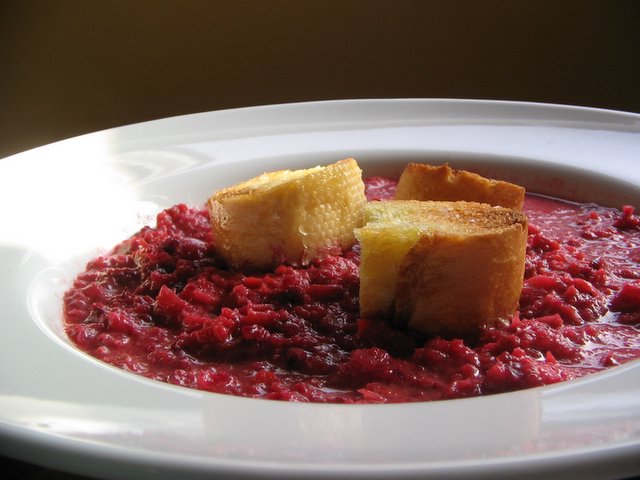
As for leftovers, today I made soup out of the Roasted Root Vegetables by blending the vegetables with some hot chicken stock and seasoning, topped with croutons that were rubbed with garlic.
Happy Post-Thanksgiving everyone!
Labels: Holidays, Ice cream, Martha Stewart, Pie, Pumpkin Pie, Tamasin Day-Lewis, Thanksgiving, Tyler Florence