Saturday, May 24, 2008
Weekend Cookbook Challenge # 28 - TV Cooks
 When thinking about this month's Weekend Cookbook Challenge, TV Cooks, I was in two minds about participating. There has been sufficient negative print regarding the post-modern breed of celebrity chefs and cooks that I didn't want to open myself up to criticism (namely, for lack of both depth and individuality). But then, I thought, "Who am I kidding?" The fact of the matter is that television channels like the Food Network and the proliferation of food-focussed magazines, all of which are either driven by or concentrate on cooks and chefs, may potentially curb what appears to be a very dangerous trajectory in the course of consumption - some of us are now questioning the provenance of our food and are thinking about what we are putting into our bodies. If one looks beyond the glossy lives, smooth skin and kitchen gadgets, what is there to criticise? Besides, I'm part of the target audience for these shows: willing and fabulous.
While we're talking about home truths, if it were not for television cooks, such as Nigella Lawson, Tyler Florence, Tamasin Day-Lewis and Hugh Fearnley-Whittingstall, I might not be cooking as I do now - regularly and with some respect for ingredients. The appeal of the cooks on television is not necessarily their looks, though that can stop one from changing the channel when one is surfing, but their accessibility. The best tv cooks condense their knowledge into culinary bullet points, perfect for generations X and Y - the Short-Term Attention Span Set. Accessibility is paired with enthusiasm for ingredients and recipes, and each episode often climaxes with a lifestyle plug: food + friends = the good life.
It was the endorsement of a lifestyle I wanted that finally motivated me to work in the kitchen in a meaningful way (also, I had time on my hand as a student and felt guilty watching my angelheart Eric cook after a day's work followed by a typically-hellish Los Angeles commute). As you will note in my earlier posts, cooking centres around dinner with my angelheart Eric or gathering around the dining table with our good friends, most notably the divine poetess Suzanne (now in Paris), the stylish and effervescent Ailene and her husband, the espresso-loving and ruminating Mirko (both now in Colorado). Since leaving Los Angeles, the drive to cook has simmered. At first I attributed this to heartache; and while I think this quite true, I think that holding dinner parties for my Kiwi friends will get the boil going again.
So, moving forward, I am revisiting the cookery books that inspired me so much in the first place. (And I appreciate your patience, having listened to me rattle on about justifying my participation in this month's theme Weekend Cookbook Challenge, TV Cooks.)
What my angelheart Eric and I love so much about Tyler Florence is his enthusiasm for big flavours (heck, the guy even keeps a "flavour journal"!). One of my favourite cookery shows is the old format of Tyler's Ultimate in which Tyler would visit two different people to learn their approach to a particular dish (sometimes going to different countries) and then he'd return to his Manhattan apartment (with its gorgeous brick wall), enlightened and inspired to put his spin on the two recipes and produce the ultimate version of the episode's featured dish (the apple pie, lasagne and paella episodes are particularly compelling and mouth-watering). There is a cookery book of the same name plus two others by this young chef: Tyler Florence's Real Kitchen and Eat This Book.
Eat This Book celebrates big global flavours. The cover shows Mr. Florence in step, powering foward with grocery bags on which are printed Chinese charcters - he is urban, savvy and purposeful. The cover does not misrepresent the contents of the book. Eat This Book places diversity on a pedastal and is a culinary passport of the decentred yet globalised world in which we live.
The recipe that inspires this post highlights Tyler Florence's skills - it presents classically-paired items (pork and apple) and adds his post-modern spin; this is global fusion that is achievable without necessitating a leap of faith from one's comfort zone.
The glory of pork belly is that it is a cheap piece of meat that can be poshed up. It responds well to dry rubs and pastes, and because of its tender structure it is best braised, allowing many possibilities for great depth of flavour. While Mr. Florence suggests serving the dish with a potato and celeriac mash, I have opted for something that is not as soft, for the apple and pork belly offer enough - roasted kumara, cut into chips.
 New Zealand kumara is also known as sweet potato. While pre-European Maori are shown to have grown many Polynesian cultivars, the most common kumara is the Owairaka Red, which was developed from a larger American variety of sweet potato. It is rich in Vitamins A and C, and the best thing is that you do not have to peel it (besides, the skin has a special fibre that has special health properties related to both cancer and longevity). Today I have chosen the red kumara for its mellow taste - if I had chosen orange kumara, it might have created too sweet a dish, what with the baked apple on the plate, too. For more information on kumara, go to Kaipara Kumara.
The following menu has been tweaked for a variety of reasons, one of them being that sage is not easily found in New Zealand, so I chose to forgo it altogether, and that I created a slightly spicier apple side by using ginger loaf instead of cornbread muffin, as you will see. Enough for four.
Braised Pork Belly and Buttered Apples
(Adapted from Tyler Florence's Eat This Book)
For the pork belly:
1/4 cup extra virgin olive oil
1 tablespoon fennel seeds, toasted then ground
2 tablespoons thyme
1/2kg/1lb pork belly (one slice, unsmoked)
salt, pepper
720ml/24 fl. oz cider
1 cup chicken stock
For the kumara:
3 kumara, approximately 900kg/1.8lb, cut into wedges
olive oil
salt, pepper
For the apples:
4 apples (I used early season Pacific Rose because they hold their structure well when cooked and have a lovely pink blush)
56g/1/2 stick unsalted butter, softened to room temperature
1/2 cup crumbs from a moist ginger loaf (or, per Mr. Florence, corn muffin)
1/2 tablespoon thyme
1 clove garlic, minced
salt, pepper
1/2 cup cider
1) Pre-heat oven to 200 C/390 F.
2) Score the fat of the pork belly and pat the entire slab dry.
3) Stir together olive oil, ground fennel seeds, thyme in a small bowl. The idea is to make a paste, but I made mine slightly wetter for extra coverage.
4) Rub liquid all over the pork belly and season generously with salt and pepper.
5) Heat a saute pan over medium-high heat. Add 2 tablespoons olive oil.
6) When oil smokes, place the pork belly in the pan, fat-side down. The belly may bend, so use tongs to ensure all the fat crisps up. It should only take five minutes for the fat to look resplendent in burnished, autumnal hues.
7) Turn pork belly over and move pan from the heat.
8) Drain fat from the pan, add the cider and chicken stock.
9) Cover with foil or heavy lid and place on the middle rack in the oven until done, approximately 45 mintues.
10) Core apples.
11) In another small bowl, mix together softened butter, ginger loaf crumbs, thyme, garlic and salt and pepper.
12) Spoon the stuffing into the cavities of the apples, and stand them up, snuggled side-by-side in a baking dish.
13) Once the pork is approximately 30 minutes from being done, pour the cider around the apples and bake until soft.
14) On a foil-lined baking tray, place the kumara wedges and drizzle over olive oil, salt and pepper. Mix together, then lay wedges in one layer. Place in the oven on lowest rack.
15) After minutes, turn kumara wedges over and leave to bake until done.
16) Pull saute pan out, remove foil or lid, and place over medium-high heat. Baste the pork belly as the liquid boils. (If you wish, you can reduce liquid to a sauce and serve as a gravy.)
17) Remove pork belly and cut into slices.
18) Check sauce for seasoning.
 The Autumn light does not allow for the most beautiful photo of the results, but you get an idea of the dish anyway. The amount of pork belly, here, seems stingy, but I assure you that it is so beautifully rich that one does not need more. And though one does not taste the cider, fennel seed and thyme strongly, there is a sweet herbiness throughout, harmonising with the richness of the meat. I did not eat the crackling, but I adore its tactile quality; it gives the dish presence. (And such wonderful quality pork belly from the guys at Seaview Meats.)
 Now I just need to set the table for friends...
Post-edit: Please visit the round-up to see what everyone else made.
Labels: Apple, Autumn, Fall, Kumara, Pacific Rose apples, Pork belly, Sweet Potato, Tyler Florence, Weekend Cookbook Challenge


Thursday, July 26, 2007
7 Random Cookery Books
 I don't know where your cookery books are, but - more often than not - my cookery books are in piles on a sofa, on a bedside table, or in the kitchen. It was with great satisfaction to put them all on the bookshelf, for my good friend, the talented and quick-witted Susan at The Well-Seasoned Cook, tagged me to participate in a meme that is meant to showcase seven randomly selected cookery books. How one randomly chooses from books piled up in two houses that are in two different countries is a bit of a problem because it eliminates some possibly whacky combinations. On the other hand, at least I don't have to get all of my cookery books into one room before randomly selecting seven of them. That presents a methodological issue anyway, for pile-making is not necessarily amenable to random selection on account of stabilising the piles by putting the largest on the bottom, thereby eliminating some books on account of where in the pile they fall. Instead of following any scientific method for random sampling (taking statistics papers at university has its upside), I went for an artistic approach. I went to the lounge, where the grand bookcase is, and just grabbed seven cookery books. I didn't really look or think - a blur of book spines passed before my eyes.
 This is what I came up with:
Field Guide to Herbs and Spices by Aliza Green - A compact book that gives information on the general description of, season for, purchase information about, and storage ideas for all the herbs and spices you can think of - and then some. There are recipes, too, though not many for main courses. There are photos of the herbs and spices in their various forms and recipes for spice mixtures also. If it wasn't for this book, which my angelheart Eric came across, we would not have fallen in love with allspice and would not have made Green's recipe that features this unique spice in a vinaigry Jamaican Jerk-Spice Chicken. The information is dense and broad - if you ever wanted to make Moroccan majoun, which requires cannabis, there is a recipe for you, or if paprika is more your thing, try Ms. Green's Hazelnut Romesco Sauce. It is a handy and easy-to-use go-to book.
Sunday Suppers at Lucques: Seasonal Recipes from Market to Table by Suzanne Goin with Teri Gelber - Well, you have already seen some of my results from using this book with the Sweet Cherry Compote and the Braised Chicken with Saffron Onions. Largely informed by her Southern French proclivities, this chef creates rich and tasty dishes with seasonal Californian produce. The chapters are divided by season and the content for each is divised by menus, preceding which are details on what to look out for at farmers' markets. This book taught me how to make good use of the Long Beach and Santa Monica farmers' markets, and every time I flip through the book, there is a new recipe I want to try, like her kabocha squash and fennel soup. The menus make you feel sophisticated, but, more importantly, they teach you how to combine and highlight different flavors.
How to Eat: The Pleasures and Principles of Good Food by Nigella Lawson - This is the British cookery book that defined a generation and got the kitchen shy X-generation into the kitchen. With her gift for prose, making even the lengthiest recipe seem achievable, Ms. Lawson writes like your best friend - full of advice and tongue-in-cheek laughs, she is there for you every step of the way. This is the first cookery book my angelheart Eric and I received - from the sassy sauciere queen Lily - and the first thing I made was the 7-Minute Steamed Chocolate Pudding, which was made in a microwave (I was a kitchen virgin, after all) and taught me that not only was chocolate messy to cook with but I might actually enjoy myself in the kitchen. The next baby step I took was in the salad direction, Chestnut and Pancetta Salad. There are classic recipes, seasonal menus, tips for entertaining and pantry-filling success. If not within grasp in the kitchen, this book is found on the bedside table. A must have. Really.
Cooking School Secrets for Real World Cooks by Linda Carucci - When I first started cooking at home, I thought I had best learn some of the principles to cooking. I didn't want to burn the house down, and I didn't ever want to serve inedible food. Though recipes tell one what to do, they don't often say why one should do it. This book is packed with cooking methodologies, "recipe secrets" (such as how to make the perfect hard-cooked eggs, which cream cheese is best for cheesecakes, and how to make the perfect risotto, to name a few) and information on how to make the most of your palate, kitchen equipment, and produce. Dense and interesting reading for those with inquiring minds.
Eat This Book: Cooking with Global Fresh Flavors by Tyler Florence - I am indebted to this man for his Roasted Chicken Stuffed with Lemon and Herbs. This is the method that really works well for me and my angelheart Eric, though we have since changed the citrus and herbs out for others that we prefer and we use less oil. I know that 'roast chicken' are fighting words in the world of cooking, but this recipe is a great introduction for those who don't know how or are afraid to make one - this is indeed the very recipe I taught to my galpal, the cocktail-swilling and sparkling Sarah. Otherwise, the book features largely Chinese-inspired twists on food, with forays into the territories of Argentina, Spain, India, and Mexico, to name a few. This is the go-to book for big flavors, whether you're making sauces, spice mixtures, vegetables, poultry, meat, seafood, or dessert. Mr. Florence's Curried Cauliflower with Chickpeas and Tomatoes and Argentinian Gaucho Steak (which first introduced me and my angelheart Eric to chimichurri) are swoon-worthy.
Mexican Everyday by Rick Bayless with Deann Groen Bayless - In California, the Mexican food is great, but this book is designed to show that there is more to this cuisine than pork burritos and guacamole, though I happen to love both. Mr. Bayless' recipes constitute the great Mexican food found predominantly away from the tourist traps. There is an excellent introduction to Mexican ingredients, and his "riffs" peppered throughout the book provide good alternative methods or ingredients to his recipes. I cooked a lot from this book last Summer, particularly when my good friend, the cocktail-swilling and sparkling Sarah stayed with my angelheart Eric and I for one month - and her view of Mexican food was transformed. Mine has been, too. I have had incredible and repeated success with Sinaloan Grilled Roadside Whole Chicken with Knob Onions and Roasted Tomatillo Salsa .
The Book of Jewish Food: An Odyssey From Samarkand to New York With More Than 800 Ashkenazi and Sephardi Recipes by Claudia Roden - This book is a carefully documented text that examines various aspects of Jewish life all over the world - from history (the 'discovery' of Jews in China), to cultural insights (how gefilte fish came about), to recipes (including an account of bagels). The recipes are divided into two sections: first presenting Ashkenazi recipes, then those Sephardi. This is not a book for those who need photos, though there are black and white stills of people (as opposed to food). Ms. Roden's prose is engaging and precise, painting a better and more erudite picture than any photo could. This is the book I use for Chicken Stock and Knaidlach, and there are hundreds more incredibly interesting recipes (from Plum Soup to Lokshen Kugel to Trieste Yeast Roll) to follow. This book will expand your culinary repertoire whilst giving you superlative cultural insight.
This is a really fun meme for foodies, who are usually known for constantly reading cookery books. I have decided to pass the baton to:
Freya at Writing At the Kitchen Table
Cenk at Cafe Fernando
Jasmine at Confessions of a Cardamom Addict
Pille at Nami-nami
Sara at i like to cook
Emma at The Laughing Gastronome
Joe at Culinary in the Country
Labels: Aliza Green, Claudia Roden, Linda Carucci, Nigella Lawson, Rick Bayless, Suzanne Goin, Tyler Florence
Friday, January 05, 2007
Beef Bourguignon
 I'm not sure that I have ever had beef Bourguignon before, but it tastes so familiar. There is something about the thickly and juicily coated, oozy meatiness of the cubes of meat that is all too familiar. Are there any Kiwis or Brits out there who can recall similar dishes that "we" make? Even if they can be recalled, I'm sure they do not require as much wine as this one does (1 bottle of a dry red for 3 1/2 to 4 pounds of meat). I was not venturing to make anything traditional; this was just a weeknight stew that I had thought of as a candidate for my submission to the Weekeend Cookbook Challenge, and I followed the simple instructions in a cookery book by contemporary chef Tyler Florence, who is known for amping up the flavors of traditional dishes, usually by introducing ingredients from other cultures.
 It is imperative to have well-marbled cubes of beef chuck or beef round. As the fat breaks down, it gives off some liquid for the stew, but mostly its purpose is to keep the meat very moist. My angelheart Eric and I were in a bit of tizz, hurrying around the market, and grabbed the last stewing meat available. Sadly, we were idiotic enough to not really look at the meat until we got home. If you are buying meat for the purpose of making a stew, the marbling factor should not be an after-thought. We were disappointed, to say the least, but we weren't going to use it for anything else (there was some marbling).
Considering the amount of meat, I think Tyler Florence's recipe from Real Cooking calls for too much flour to coat the meat (this acts as a thickening agent for the stew and allows for a slow release of the fat from the meat). That which did not adhere to the meat hung around on the bottom of the dutch oven, and though I scraped and stirred the stew occasionally, this was not enough to break it up. I should have trusted my eyes as I was coating the meat, so I do take some responsibility for this - and for those of you who feel that recipes are just guidelines, then the responsibility for adding too much flour should fall squarely on my shoulders. In my defense, and upon reflection, Anthony Bourdain's Les Halles Cookbook uses only 2 tablespoons of flour for 2 pounds of meat, and Tamasin Day-Lewis' Tamasin's Kitchen Bible uses 1 1/2 to 2 tablspoons for 1 3/4 pounds of meat. The latter clearly shows that it really depends on the day how much flour the beef absorbs. Lesson learned: Use the flour in this recipe only as a guideline; if no more flour is being absorbed, then cease adding it.
This recipe has been adjusted to feed around 3 people (my angelheart Eric and me, plus leftovers).
Beef Bourguignon
(from Tyler Florence's Tyler Florence's Real Kitchen)
canola oil (we used vegetable oil, actually)
2 bacon slices
2 pounds beef chuck or round, cut in 2" x 2" (5cm by 5cm) cubes
salt
pepper
1/4 cup all-purpose flour
1/8 cup Cognac
1/2 bottle dry red wine (to keep it traditionally flavored, go with a Burgandy)
7 1/4oz low sodium beef broth
1 tablespoon tomato paste
Bouquet garni (we used: rosemary, thyme, tarragon, and, mostly, flat-leaf parsley)
2 garlic cloves, chopped
1 cup pearl onions, blanched and peeled (or baby onions from the frozen section)
(1/2 pound mushrooms - much to my angelheart's chagrin, I omitted this from the stew because I do not enjoy mushrooms at all; I did add 1/4 pound peeled carrots)
pinch of sugar (to balance out the red wine's acidity)
1 tablespoon unsalted butter
flat-leaf parsley, chopped, for garnish
1) Put a Dutch oven over medium heat and drizzle 1 teaspoon of oil.
2) Fry the bacon until it is crisp, then remove it to a paper towel for later usage.
3) Brown the beef well in oil and bacon fat in batches. Do not crowd the pot or the meat will not brown properly but will start stewing, thereby ruining the slow time release of the fat in the beef, rendering the beef dry.
4) Once the meat is browned, put it all back in the pot and sprinkle the flour over it. Stir to make sure it is well-coated.
5) Pour in the Cognac and stir to scrape up bits on the bottom of the Dutch oven.
6) Once the alcohol has mostly evaporated, pour in the red wine and beef broth, followed by the tomoto paste and bouquet garni. Stir everything together.
7) Bring the pot up to a simmer and cook until the liquid starts to thicken, yielding a consistency like that of a sauce, approximately 15 minutes.
8) Cover the pot, reduce the heat to low, and simmer for 1 hour.
9) Uncover the pot, add the garlic, onions, carrots (and mushrooms, if using), and sugar.
10) Season with salt and pepper.
11) Turn heat up to medium-low and simmer for 30-45 minutes, until meat and vegetables are tender.
12) Remove bouqet garni, stir in the butter.
13) Serve with flat-leaf parsley and crumbled bacon bits as garnish.

Labels: Tyler Florence
Saturday, November 25, 2006
Thanksgiving
 Because this was going to be my last Thanksgiving in the U.S. for a while, I wanted to celebrate it twice. Well, I'm not sure that Thanksgiving is really a holiday for celebrating per se, but in the five years I've lived here, no one has given the traditional "let's be thankful for this, that and the other" speech, and no one appears to reflect on what one must be thankful for (the gas-guzzling? the waste in the landfills that we've created?). So, I'll just say here that I'm thankful for my experiences in the U.S. and the loved ones with whom I've been happy to share this period of time.
 Mostly I'm just thankful for good food.

The first Thanksgiving meal was spent at our friend Suzanne's. It was especially glorious because our good friend, Ailene, celebrated with us (her husband has made the move out of state, and she is going to join him very soon), and Suzanne made turkey for the first time. She brined the 8 pound turkey for five hours before roasting it for a couple more hours. The baste consisted of butter, thyme, and lemon zest. Though there was no stuffing, the turkey's cavity was filled up with lemons and oranges, and they perfumed the succulent meat splendidly.
For my part, I made Roasted Root Vegetables with Honey, Balsamic Vinegar, and Fresh Goat Cheese and Pumpkin Pie with Candied Pepitas and Dried Fig and Coffee Ice Cream.
 For the vegetables, I wanted a twist on tradition. I have had a million variations of roasted vegetables - after all, I'm from New Zealand, a land where The Sunday Roast is an institution that harks back to New Zealand's colonial days. I wanted to make something with big flavours and lots of style. To accomplish both of these, I turned to my angelheart Eric's favorite celeb chef (and one of mine, too), Tyler Florence. His new cookery book, Tyler's Ultimate, builds on the theme of his Food Network show in which he creates contemporary twists on traditional fare (not always traditional in the American sense, either, for some of my favourite shows include his renditions of paella, lasagne, and English roast chicken).
 Roasted Root Vegetables with Honey, Balsamic Vinegar, and Fresh Goat Cheese (from Tyler Florence's Tyler's Ultimate)
3 medium carrots, peeled and cut into two-inch long pieces (5.5 cm)
2 medium beets, peeled and cut into sixths
2 medium turnips, peeled and cut into sixths
2 fennel heads, outer leaves stripped and cut into quarters
3 shallots, unpeeled, cut in half lengthwise
1/4 cup olive oil
Kosher salt and freshly ground black pepper
1/4 cup honey
1/4 cup balsamic vinegar
4 oz chilled fresh goat cheese
1) Preheat oven to 350 deg. f. (195 deg. c.).
2) Toss vegetables with olive oil, salt and pepper on a baking sheet. Spread vegetables out in a single layer once done.
3) Roast vegetables for 25 minutes.
4) Whisk together honey and vinegar, then pour onto roast vegetables and toss them together.
5) Roast vegetables for 20 minutes, or until they are fork-tender and caramelized.
6) Top vegetables with pieces of goat cheese.
I had never had pumpkin pie before this Thanksgiving, and because I knew no one was going to make it, I wanted to take a risk and do it myself. Besides, if I failed, I was not concerned with not being invited to a Thanksgiving meal next year since I'd be back in New Zealand. Admittedly, I was very nervous. Who best to turn to other than the undisputed queen of the American lifestyle, Martha Stewart? The Martha Stewart Living, November 2006 magazine is really quite fabulous, and I was beaming when I came across her recipe. I don't know if most recipes call for the spices she does, but I was thrilled beforehand knowing the mellow depth they'd add, and I looked forward to making my own graham crust. As for the candied pepitas, I didn't even know what pepitas were, so I figured it was a good opportunity to find out. They are hulled pumpkin seeds - so now we all know.
Pumpkin Pie with Candied Pepitas
(From Martha Stewart Living, November 2006)
For the graham crust:
2/3 cups all-purpose flour
1/3 cup whole-wheat flour
1/4 cup ground pepitas
1/2 teaspoon salt
1/4 teaspoon ground cinnamon
1/2 cup (113g) unsalted butter, softened
1/3 cup light brown sugar, packed
1) Combine flours, pepitas, salt, and cinnamon (either with a whisk or in a food processor).
2) Add butter and sugar and proccess I did this in a bowl with my own hands, but you can do so with a food processor).
3) When dough comes together, put in a 9 or 10 inch single-crust metal pie plate (I actually put mine in my 10" fluted tart pan), and then freeze for 15 minutes.
For the filling:
1 1/2 cups canned solid-pack pumpkin (or 1 small sugar pumpkin roasted cut-side down at 425 deg. f./220 deg. c. for 50-60 minutes)
3 large eggs, lightly beaten
3/4 cup light brown sugar, packed
1 tablespoon corn starch
1/2 teaspoon salt
1/4 teaspoon ground allspice
pinch of cayenne pepper
pinch of ground clove
1 1/2 cups evaporated milk
1) Preheat oven to 350 deg. f. (180 deg. c.).
2) Bake crust (after it has been in the freeze for 15 minutes) until dry and golden brown - about 20 minutes - and then let cool completely.
3) Reduce oven temperature to 325 deg. f. (170 deg. c.).
4) Whisk pumpkin and eggs in a bowl.
5) In a separate bowl, combine brown sugar, cornstarch, salt, and spices.
6) Whisk dry ingredients into the pumpkin mixture.
7) Whisk in evaporated milk.
8) Tap firmly on counter to release air bubbles and let stand for 20 minutes.
9) Pour filling into graham crust; tap to release air bubbles.
10) Bake until set, approximately 50 minutes.
For the candied pepitas:
6 oz (2 cups) pepitas
5 tablespoons sugar (the recipe actually calls for 6 tablespoons)
1 large egg white, beaten
pinch of coarse salt, plus more for seasoning
pinch of ground allspice
pinch of cayenne pepper
1) Preheat oven to 350 deg. f. (180 deg. c.).
2) Stir ingredients together in a bowl.
3) Spread mixture in a single layer on a baking sheet lined with parchment paper.
4) Bake until pepitas are golden and slightly puffed, approximately 10 minutes.
5) Season with salt.
6) Stir gently, leaving some clumps.
7) Let cool completely in a bowl before storing in an air-tight container for up to three days. Sprinkle a small handful over pumpkin pie and save the rest for snacking :-)
 Of course, most people have cream on the side or on top of their pumpkin pie. I, of course, wanted something a little different. Tamasin Day-Lewis is very inspiring, and, like Nigella Lawson, has interesting dessert ideas. I was eager to make something from her latest book, Tamasin's Kitchen Classics,which is divided into the following sections: A Classic Start, the Main Course, Classic Cakes (interesting twists, such as Rhubarb and Ginger Crumble Cake and Upside-Down Pear and Spice Cake), A Classic Finish (desserts, such as Redcurrant Curd Ice Cream and Black Forest Trifle) and Basics (stocks and pastries). It is a gorgeous and hunger-inducing book - my latest "must have". Tamasin's Dried Fig and Hazelnut Ice Cream sounded like too much of a dream to pass up, especially since I had good organic dried figs on hand. I omitted the praline and substituted the vanilla base for one of coffee).
 Dried Fig and Coffee Ice Cream
(Adapted from Tamasin Day-Lewis' Tamasin's Kitchen Classics)
9 large, whole dried organic figs
3 tablespoons squeezed orange juice
2 tablespoons cognac
1 cup whole milk, well chilled
3/4 cup granulated sugar
3 tablespoons instant espresso or coffee
2 cups heavy (double) cream
1 teaspoon pure vanilla extract
1) Chop the figs into small dice and soak them in the orange juice and cognac for 4-6 hours.
2) In a medium bowl, whisk to combine milk, sugar and espresso powder until sugar and powder are dissolved.
3) Stir in the cream and vanilla extract.
4) Put into ice cream maker with the liquid that the figs have not absorbed.
5) Once churned, fold figs pieces into the ice cream and freeze.
 For the second Thanksgiving dinner, we ate at my angelheart's sister's with his mother, brother-in-law, and two-and-a-half-year-old nephew. On the menu were cornish game hens stuffed with bulgur wheat, raisins, and pine nuts (which you can read about here), sauteed spinach with garlic, and prosciutto-wrapped scallops and shrimp. Eric's sister's dessert didn't quite turn out, but she made Lemon Madelines during the day. It is a recipe from Martha Stewart's Baking Handbook, and I'm tempted to make them in the future because they were simultaneously fluffy and substantial, and the combination of almond and lemon in heavenly.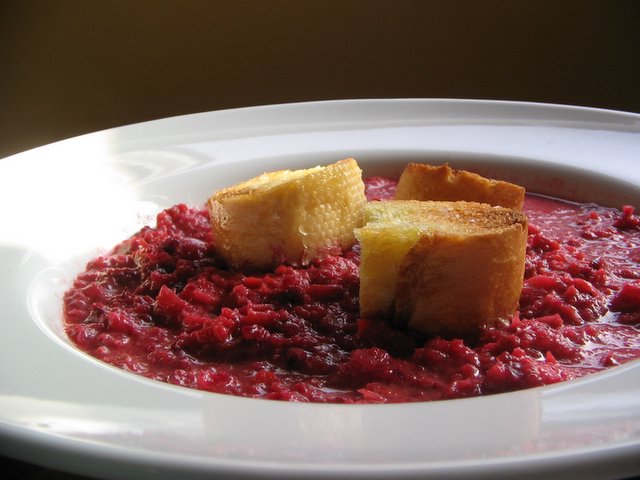
As for leftovers, today I made soup out of the Roasted Root Vegetables by blending the vegetables with some hot chicken stock and seasoning, topped with croutons that were rubbed with garlic.
Happy Post-Thanksgiving everyone!
Labels: Holidays, Ice cream, Martha Stewart, Pie, Pumpkin Pie, Tamasin Day-Lewis, Thanksgiving, Tyler Florence