Sunday, April 05, 2009
Mjuk Toscakaka
 I have an usual love affair for European baked goods. Unusual because I have never really experienced any freshly made...no German spice cookies, no Hungarian cakes, no Austrian or Croatian pastries, no Scandinavian baking at all...you get the point. Really, the only European baked goods I've had are the few I've made after watching Ingmar Bergman, Susanne Bier and Lars von Trier films or after reading about traditional baked offerings for Christmas, St Lucia's Day and St Martin's Day. It seems that I love the idea of heavenly-scented baked goods against a wintry landscape, which speaks directly to the comfort food orientation of my blog.
I have, however, been consistent in my curiosity, for the baked goods I covet and dream of making are always made with spices and are often served with gorgeous jams or preserves. To be served such food in an authentic environment would be sublime, but in the meantime, I will try to realise the fantasy in baby steps. I do not have the confidence to make linzertorte or strudel, but the odd cake or cookie recipe is enough to satisfy my cravings.
Sometimes my curiosity is peaked by what I first think are anomalies, such as using cardamom in cookie or cake batters, which, as it turns out, is commonplace in Scandinavia. Today's post is very simple, and it relies heavily on my preferred nuts: almonds. (Baking with nuts is another of my proclivities.) I have often thought of almonds as belonging to areas with warm climates, so it surprised me that this variation on butter cake would appear in a Swede's repertoire - actually, it is a popular cake made throughout Scandinavia. And that there is a reference to Tosca in the title of the cake, I cannot help but be intrigued...
Mjuk Toscakaka
(from Tamasin Day-Lewis' The Art of the Tart)
For the cake:
2/3 cup unsalted butter
1/2 cup sugar
2 eggs, lightly beaten
1 teaspoon vanilla extract
1 1/4 cups all purpose flour
1 teaspoon baking powder
5 tablespoons water
For the topping:
1/4 cup ground or slivered almonds
4 tablespoons butter
5 tablespoon sugar
1 tablespoon all purpose flour
1 tablespoon milk
1) Preheat oven 180 C/350 F.
2) Cream butter and sugar together until the mixture is smooth in texture and pale in colour.
3) Beat in the eggs little by little.
4) Stir in the vanilla extract.
5) Sift in the flour and baking powder, then beat it in well.
6) Add water, then beat until smooth.
7) Pour the mixture into a prepared baking dish, such as a tart pan.
8) Ensure that the top is smooth before putting on the middle rack in the oven.
9) Bake for 30 minutes.
10) Remove pan from oven, then turn heat up to 200 C/400 F.
11) For the top of the cake, put all ingredients together in a saucepan until combined and heated through.
12) When the mixture reaches boiling point, pour it over the cake in one layer.
13) Continue to bake in the oven until the top has browned. Be careful not to let it burn.
This cake can be served hot or cold, with or without cream. The caramel and almond topping is fragrant, sweet and nutty, giving complexity to the simple, buttery sponge beneath. As for the connection to opera, I cannot quite tell, but it seems there is a cultural tradition of naming cakes after figures in the high arts. Using slivered almonds is traditional, but coarsely grinding them, as I have here, does not appear to affect the overall quality of the cake. Like most baked goods that contain nuts, a slice of this fragrant cake is perfect with coffee.
Labels: Afternoon Tea, almond cake, Almonds, Cake, Swedish, Tamasin Day-Lewis


Thursday, January 17, 2008
Fruit Tart à la française
 For a while now, I have considered making a delectable fruit tart for my 30th, like the ones seen in a French pâtisserie: pâte sucrée, crème pâtissière, loads of fruit and a fruity glaze. After my second apple martini last night (seeing out the 20s), I decided to make pâte sucrée. Nigella Lawson reckons it's a nightmare; Tamasin Day-Lewis makes it sound like a breeze. My proper baking bible, Martha Stewart's Baking Handbook, is in the US, and so for the details of this tart, I relied on Tamasin Day-Lewis' Tamasin's Kitchen Bible.
Waking up very early after the two martinis, I pulled the dough out of the fridge to come to a pliable temperature. When I thought that had been reached, I started rolling. The pastry crumbled and then proceeded to stick to everything. Knowing that one can patch a tart base together, I decided to construct an entire pastry shell out of a patchwork. Anticipating more shrinkage than usual, I crammed as much as I could into the 25cm/10" fluted shell and put it in the fridge for an hour (to also prevent further shrinking). It didn't matter. When I removed the beans part way through the blind baking process, I could see that seams had been created along the base, creating gaps. There was no way the pastry was going to expand and fill those in. Into the bin the half-cooked tart shell went.
So, what went wrong? Ms. Day-Lewis states that she uses egg yolks to bind the dry ingredients together (as opposed to iced water, which is used for shortcrust pastry). In the list of ingredients for her pâte sucrée, however, is the suggestion of a little cold water. What? The sand-like combination of flour, butter, icing sugar and vanilla seeds seemed to come together after mixing in the cold egg yolks. The addition of water seemed unnecessary, and Ms. Day-Lewis did not explain when one should use that little amount of cold water. When the pastry crumbled, though, I knew it was too dry.
 I had another go at it, but this time without the luxury of really cold flour and eggs because I didn't expect to have to make the pastry again (and one would hope not given the amount of eggs and vanilla already used in the failed pâte sucrée as well as the crème pâtissière). I added perhaps one tablespoon of ice-cold water after binding the dry ingredients with egg yolks. The pastry was supple and not soggy. After resting it for an-hour-and-a-half, I left the pastry on the kitchen counter for 20 minutes and then rolled it out. It still tore a bit and was perhaps a little too wet to transfer from the rolling pin. I got around this by making a tri-fold, which I opened out over the 25cm/10" fluted tart shell. Once baked blind, there was a tiny split seam...Grrr...So, I figured, one has to compile this tart just before eating, for the custard will make the tart shell soggy anyway, and I just went with it...
Pâte Sucrée
(from Tamasin Day-Lewis' Tamasin's Kitchen Bible)
1 1/2 cups flour, sifted
110g/4 oz butter, cut into a dice
1 tablespoon icing sugar, sifted
seeds from 1 vanilla pod
2 egg yolks
1-2 tablespoons ice-cold water
1) Lightly with fingers rub the butter into the flour, sugar and vanilla seeds.
2) Once a sand-like texture is achieved, add the egg yolks. Mix together. If the dough is not coming together and or is not supple, add ice-cold water, mixing only one tablespoon at a time, for you might not need all of the water. Too much water will make a sticky dough.
3) Wrap in cling-film and refrigerate for at least one hour.
4) Pre-heat oven to 200 C/400 F.
5) Bring pastry out of fridge and allow it to come to a pliable texture, about 15-20 minutes.
6) On a lightly floured surface, roll the pastry out, keep turning it so it does not stick to your cold surface.
7) Set pastry into your tart shell, cover with parchment paper and baking beans.
8) Bake for 15 minutes.
9) Take out of the oven, remove beans and parchment paper. Prick the base of the shell with the tines of a fork. Put back in the oven until cooked through and golden, approximately 10 minutes.
10) Allow to cool before filling with crème pâtissière.
Crème Pâtissière
(from Tamasin Day-Lewis' Tamasin's Kitchen Bible)
340ml/12 fl. oz milk
150ml/5 fl. oz heavy cream
vanilla seeds from 1 vanilla pod
1 egg
3 egg yolks
75g/2 1/2oz caster sugar (vanilla sugar works here, too)
1/3 cup cornflour, sifted
1) Into a saucepan pour milk, cream, vanilla seeds and split vanilla pod. Bring to scalding point over a low heat.
2) Whisk together the egg, yolks and sugar until pale and creamy.
3) Add one-third of the cornflour to egg mixture and mix thoroughly, then do the same with the remaining two-thirds. Ensure that all lumps are worked out.
4) Remove vanilla pod from milk. If you want, you can rinse it then dry it before adding to your sugar container.
5) Pour one-third of the milk to the egg mixture and whisk well. Pour this into the rest of the milk in the saucepan and continue to whisk over a gentle heat. The cornstarch helps stop the custard from splitting, but you do not want to ever boil the mixture, so whisk, whisk, whisk.
6) Once thickened, pour into a bowl, cover and cool. Once cooled, this can be stored in the fridge for about three days.
 A bit of a trial, really. I didn't bother with glazing the fruit as I had planned, for I could see the fruit sinking in the pastry cream. Great. I thought it looked quite solid, but I suppose I should have seen if a spoon could stand up in it as that would have been a better measurement of how much the crème pâtissière had set. And I can see why people avoid making pastry altogether. Perhaps with a little more experience I will create a perfect pâte sucrée, which I feel might also be eased by checking other recipes. I was afraid that the cream would break the dams of the pastry, but it didn't. I must say, though, that life would have been made simpler with a shortcrust pastry because the crème pâtissière is so strong in flavour that the pâte sucrée had no chance of standing up to it - but it did look lovely, in the truest sense of the word: simple, natural, sweet. In all, though, an incredibly tasty tart, if a messy one. I only hope that is not too indicative of my year of being 30.

Labels: crème pâtissière, French, Fruit tart, pâte sucrée, Tamasin Day-Lewis, Tart
Saturday, September 29, 2007
Caramelised Onion Tart
 I am aware that today's recipe may not be the most inspiring because I am making yet another tart. Yes, another tart recipe. Well, what can I say? It is Saturday. Though not suffering from an alcohol-induced hang-over (those days are very few and far between, anyway), I am suffering one from too much reading. I just don't want to think anymore. And the best lunch time meal I can make without thinking is a tart.
Having said that, I cannot leave well alone any recipe, even if it is a simple one of onions or leeks, so I am keen to share any success from my tinkering.
Today there are a few sources of inspiration. Primarily I am motivated by the Caramelised Onion and Anchovy Tart that features in this month's Donna Hay Magazine. I am slowly developing a liking for anchovies, the salty fishes that augment a roast of lamb with savoury depth or that gives heads of garlic roasted in olive oil an edge of nuttiness (see my Bagna Cauda). I just didn't have any on hand, and, because I wanted to relax in the kitchen for a bit, I was inclined to make my own pastry - just not a puff pastry, which is what the Donna Hay recipe uses. I also thought making the caramelised onions more complex with the inclusion of a herb, as in Suzanne Goin's Saffron Onions, and with the addition of alcohol, like Tamasin Day-Lewis' sherry-sozzled adaptation of the Markwicks' Blue Cheese and Tart with Red Onion Marmalade in The Art of the Tart: Savory and Sweet.
For the pastry, remember to start off with fridge-cold flour and butter, and also keep a cup of iced water to hand. As for the marscapone cheese and heavy cream that are used to make the "cheese topping," they lend incredible richness and smoothness. A mild, melting cheese ensures that the topping remains velvety and is not overpowering, for the caramelised onions should take centre stage here.
Rich Shortcrust Pastry
(from Nigella Lawson's How To Eat: Pleasures and Principles of Good Food)
5oz/140g flour, sifted
2 1/2oz/70g unsalted butter, cut up into small cubes
1 tablespoon orange juice (or lemon juice)
1 egg
1 pinch salt
black pepper, freshly ground
iced water, might not be necessary
1) In a bowl, rub together the flour and butter with the tips of your fingers until a granular consistency is reached.
2) Separate the egg. You can choose whether to keep the whites or not, for they can optionally be used after the pastry has baked blind.
3) To the egg yolk, lightly beat in the orange juice, salt, and pepper - one or two cranks from the pepper mill should suffice.
4) Mix egg and flour mixtures together with hands (mixing in one direction) or wooden spoon. You want the mixture to cohere into a ball. If it does not seem to be coming together, add **one** tablespoon of iced water at a time. You may not need any, but if you do need it, be careful not to add too much because you'll end up with a wet mess and the damage will be done - unless, of course, you want to pour out the excess and add in a bit more flour, but that is a gamble, and I wouldn't recommend it.
5) Once a ball has been formed, create a flat disc, and cover in cling-film. Refrigerate for 30 minutes.
6) Bring pastry out of the fridge and let rest for 5-10 minutes, to allow flexibility.
7) Preheat oven to 390 F/200 C.
8) Put pastry on a floured surface. Roll it out with a floured rolling pin, turning the pastry after each pass of the rolling pin to ensure it doesn't stick to your surface. Roll it out so it can fit into a prepared (that is to say, buttered and floured) 9 or 10" tart shell.
9) Allow to sit in tart shell in fridge for 15 minutes.
10) Cover pastry with parchment paper onto which put baking beans (this is to weight down the pastry, so it doesn't rise and bubble during the initial baking process).
11) Bake for 15 minutes.
12) Remove parchment paper and beans. Prick base with tines of fork and then dab egg whites over the surface to give a crispy result, if you kept the whites, that is.
13) Bake for a further 5 minutes.
Caramelised Onions
(Adapted from Tamasin Day-Lewis' The Art of the Tart: Savory and Sweet)
2 tablespoons olive oil
2oz/60g unsalted butter
2 medium onions, sliced thinly
1 small red onion, sliced thinly
1 1/2 tablespoons thyme (or as you prefer)
a pinch each of sea salt and freshly ground black pepper
1 pinch sugar
2 tablespoons red wine vinegar
2 1/2 tablespoons brandy
1) In a skillet over medium heat, combine the olive oil and butter.
2) When the butter has melted, throw in the onions and thyme, followed by the salt, pepper, and sugar. Stir frequently, coating the onion slices in the oil and butter. Cook the slices down until quite feeble, approximately 25 minutes.
3) Stir in red wine vinegar and brandy. Once the alcohol has evaporated, remove from the heat.
Caramelised Onion Tart
Baked tart shell, as above
Caramelised onions, as above
1/4 cup marscapone cheese
1/4 cup heavy/double cream
1 cup grated Cheddar cheese, or whatever cheese you prefer
a pinch each of sea salt and freshly ground black pepper
1) Preheat oven to 390 F/200 C.
2) In a bowl, combine marscapone and cream until smooth, then add cheese, and a pinch each of salt and pepper.
3) Layer the onion over the base of the tart shell.
4) Pour the marscapone mixture over the onions.
5) Bake until golden, approximately 15 minutes.
 The sweet aroma coming from the oven will let you know when this elegantly luscious tart is ready. The first flavour to appear, at least on my tastebuds, is the brandy-coated onions, then the cheese, and finally the thyme. The pastry is incredibly buttery and flaky, adding to the richness of the contents of the tart shell. Feel free to do without the adornments of thyme, but a student must glamourise his or her life from time to time, however simply. This is an easy and fulfilling lunch for any season, and it might be a recipe I keep tinkering with over the next two months when I seek refuge from Master's thesis-induced fatigue.
This post is being submitted to Sarina at Trini Gourmet, who is hosting this month's Hay Hay, It's Donna Day.
Post script Go here for the Hay, Hay, It's Donna Day # 15 round-up.
Labels: Hay Hay It's Donna Day, Nigella Lawson, Onions, Tamasin Day-Lewis, Tart
Tuesday, June 05, 2007
Flamiche
 Traditionally, a flamiche is a tart of a strong cheese (boulette de Romedenne) and eggs, thus a quiche, from the region of Namur in southeastern Belgium, just cross the ditch and one French administrative region up from one famous for its quiche, Lorraine. French chef Paul Bocuse advises that the flamiche is to Picardie (a northern administrative region that contains the departments of l'Asine, l'Oise, and la Somme) what the quiche is to Lorraine. Its most famous incarnation highlights leeks.
The leek is generally available year round but is at its peak during the cooler months of the year. Its soft onion flavors that offer so much comfort make it one of my favorite winter vegetables (having to share the mantle with beetroot). On a rainy day and paired with heavy cream, leeks are best served up in a tart.
The shortcrust pastry below is for a 25cm/10" fluted tart shell. I had the best time making the pastry because the kitchen was very cool late this morning, amenable to a sturdy (i.e. does not tear) result. I wonder, though, if making it by hand also made a difference, for I was able to get a much better feeling for the pastry as I was making it, knowing when enough water to bind had been added.
If you are going to make shortcrust pastry with a food processor, put the sifted flour, salt, and diced butter into the processor and blitz until sand-like granules are formed, then add 1-2 tablespoons of ice-cold water to cohere the mixture.
Flamiche
(from Tamasin Day-Lewis' The Art of the Tart)
For the shortcrust pastry:
1 1/4 cups flour, sifted
pinch of kosher salt
113g/4oz unsalted butter, diced
1-2 tablespoons ice-cold water
For the tart's filling:
slightly less than 1.5kgs/3lbs leeks, cleaned and cut into 1 1/4cm/ 1/2" slices
50g/4 tablespoons unsalted butter (Ms. Day-Lewis uses 6 tablespoons)
1 1/4 cups heavy cream
3 egg yolks
salt
pepper
1/8 teaspoon nutmeg, freshly grated
To make the shortcrust pastry by hand:
1) Sift together the flour and salt into a large bowl.
2) Add the diced butter.
3) Using your fingertips, rub the butter into the flour until sand-like granules are formed.
4) Add one tablespoon of ice-cold water to cohere; if this does not quite do the trick, add another tablespoon.
5) Once formed into a ball, wrap the pastry in cling-film and put it in the fridge for at least one hour.
6) Once chilled (and firmed), bring out of the fridge until pliable.
7) Lightly flour your surface and place the ball of dough on it, rolling away from the center and turning after each pass of the rolling pin until large enough to fit into your tart shell.
8) Put in the fridge again until ready to bake.
To make the tart filling:
1) Over a medium-low heat, melt the butter in a medium-sized skillet.
2) Add the leeks and saute gently until completely softened, approximately 15-20 mintues.
3) Take off the heat and cool.
4) In a small bowl, whisk together the heavy cream, egg yolks, pinches of both salt and pepper, and a bit of freshly grated nutmeg.
5) Stir this creamy goodness into the cooled leeks and combine.
For the Flamiche:
1) Preheat oven to 175C/350F.
2) Pour the leek mixture into the cold pastry shell. Remember: the pastry is not baked blind, so it is imperative that the leeks are cooled before adding the cream mixture and, more importantly, before pouring into the pastry case. If not, you will completely melt the butter and have a very soggy pastry.
3) Bake for 35-40 mintues, until set with a very slight tremble.
 This is not as runny as it may seem. The preferred consistency is not rock hard, for that would take away the work put into gently sauteing the leeks. The result of a tremle-set is a very creamy interior, which goes down comfortably and comfortingly. The pastry shell is just crisp to encase the interior but yielding enough to melt in the mouth.
Labels: Leek, Tamasin Day-Lewis, Tart
Wednesday, February 07, 2007
Stem Ginger and Spice Ice Cream
 There are many times when reading cookery books that particular ingredients keep popping up. Sometimes I do research to decide whether or not I'm interested in trying them out; other times I am fixated on them. It is when I can perfectly imagine the result of recipes that these ingredients come to the fore, as was the case with stem ginger. This was rather shocking to me at first because I didn't think I was a ginger fan, but then I started thinking of my favorite New Zealand treats: gingernut biscuits (cookies) and ginger crunch, which my fellow Kiwi, Bron, wrote about here). I was unlucky in my pursuit of the item through the conventional route (various markets: super, farmers', and those in between) before finding the product online and promptly ordering it.
Stem ginger is no more than what it sounds like - stem of ginger that has been peeled, chopped into cubes or shaped into globes, then preserved in a sweet syrup (not tooth-achingly sweet, though). I have used the product once already (in a Nigel Slater recipe for Double Ginger Cake) to great success, and now I'm ready to move onto other recipes that feature this special ingredient.
In Los Angeles, though technically Winter, we have been experiencing rather warm temperatures since the weekend (about 80 F/26.7 C), thus necessitating a double-pronged effort to: (a) use stem ginger and (b) make ice cream. Could I trust myself to create a receipe? No. I have neither the balls nor the culinary experience to yet trust my own palate and hand, and with all these cookery books around (that will soon have to be packed up into boxes and shipped to New Zealand or left in storage at my angelheart Eric's mum's house in the U.S.A.), how could I not at least peer into them (ok, let's be frank: I have my nose buried in them most of the time, and they can be found strewn, bookmarked and earmarked, throughout the sunny abode...nightstand, kitchen, dining room, bathroom...)?
Would you believe that I found a recipe that exactly answered my requests? Tamasin's Kitchen Bible by Tamasin Day-Lewis is a massive tome replete with invaluable tips (or what she calls "lowdowns") and information to improve one's cookery skills and to find recipes to suit all occasions and situations. I don't know how I didn't notice this recipe before, but the cookery book referenced is dense, people!
Stem Ginger and Spice Ice Cream
(from Tamasin Day-Lewis' Tamasin's Kitchen Bible)
16oz (450ml) milk
2 vanilla pods, split and insides scraped out
6 egg yolks
6oz (170g) unrefined caster sugar, or 2 tablespoons runny honey (I used chestnut)
20oz (600ml) double cream, or 10oz (300ml) of both double cream and creme fraiche
6-8 cubes stem ginger, starting off with 6, then tasting to see if more required
1 tablespoon ginger syrup
7 cloves and a few bits of cinnamon bark, crushed in a mortar
2 more cubes stem ginger, very finely chopped
1) Scald the milk with split vanilla pods and their seeds.
2) Whisk into egg yolks and either sugar or honey.
3) Return mixture to pan, cook over low heat, whisking as you go until it thickens. (You can also whisk madly at medium heat for approximately 10 minutes before the mixture thickens. The key is to ensure that the mixture does not boil and that the egg yolks do not curdle. If they do curdle, add a tablespoon or two of really cold cream off the heat and whisk madly to bring back together, or whisk madly to reincorporate after pot has been plunged into a sink filled with ice water.)
4) Remove from heat as soon as mixture has thickened and whisk in the cream/creams.
5) In the blender, whizz the ginger, ginger syrup, and half a teaspoon of the spice mixture. Taste to see if ginger predominates to your liking, if not, then add more cubes of ginger. Ensure that the musky backnote of spice is not lost, though.
6) Churn in ice cream according to manufacturer's directions (usually about 30 minutes), adding finely chopped stem ginger in the last few minutes. You could also put mixutre with very finely chopped stem ginger in an ice tray and freeze, remembering to stir the setting walls of the ice cream into the middle of the tray after the first hour, and then again an hour or two later in order to prevent crystals forming.
7) To further accentuate the point, I served the ice cream with preserved ginger.
This is the second time I have made ice cream with a custard base. I still find it too eggy. Next time I will use one less egg yolk to see what happens. To overcome the eggy-ness, I would actually use more of the spice mixture. There is no denying that the bones of this recipe are really great and that the result, though slightly eggy for my liking, was enjoyable spoonful after spoonful. I can always rely on Ms. Day-Lewis for an original and inspiring recipe that piques my interests.
Labels: Ginger, Ice cream, Tamasin Day-Lewis
Monday, January 08, 2007
2 Recipes with Buttermilk - Oven-Fried Chicken and Buttermilk, Cinnamon and Pecan Cake
Before the divine poetess Suzanne headed for Paris, she left my angelheart Eric and I with a few items she was afraid would "go off" while abroad. One of these items was buttermilk. I had never used it before but knew about its tanginess. Most buttermilk in the U.S. is of the cultured variety, whereby lactic acid is added to non-fat or low-fat milk, though there are some products in which the lactic acid has been added to whole milk, yielding a much creamier consistency.
 I had never heard of buttermilk before moving to the U.S., so I didn't know what to do with it. Upon its receipt, I recalled an episode of Barefoot Contessa in which Ina Garten marinated chicken pieces in buttermilk before lightly frying and oven-baking them. My angelheart Eric loves fried chicken, though he eats it infrequently, and he suggested we try it this healthier way. I pulled out Ina Garten's Barefoot Contessa Family Style and promptly set about making the chicken. The only adjustment I made was to the dredging flour to which, in addition to salt, I added Sichuan peppercorns and cumin. The quantities of the recipe serve 2-3.
Oven-Fried Chicken
(from Ina Garten's Barefoot Contessa Family Style)
1 chicken (1.5 pounds/almost 3/4 kg), or your favorite chicken pieces
1/2 quart buttermilk
1 cup all-purpose flour
1 tablespoon kosher salt
1 tablespoon freshly ground black pepper (we didn't use this on account of the Sichuan peppercorns)
2 tablespoons Sichuan peppercorns, ground
1 tablespoon cumin, lightly toasted then ground
vegetable oil
1) Place chicken pieces in a large bowl and pour buttermilk over them.
2) Cover with cling film and refrigerate overnight.
3) Preheat oven to 350 F (180 C).
4) Combine flour, salt, pepper, or Sichuan pepper and cumin in a bowl; this is the dredging flour.
5) Take chicken out of buttermilk and coat each piece in the dredging flour and put aside.
6) Pour oil into a large heavy-bottomed pot (to avoid the splashing of oil over stove top) to a depth of one inch. Heat up to 360 F (185 C).
7) In batches, place pieces of chicken in the oil and fry for about three minutes on each side.
8) Place chicken on a metal baking rack set on a baking sheet, or place chicken on very lightly oiled aluminum lined baking sheet (but the chicken pieces will not turn out as crispy).
9) When all the chicken is fried, bake for 30-40 minutes, until the chicken is no longer pink inside.
 In my humble opinion, if you do not add any herbs or spices to the dredging flour, then the chicken is pretty nondescript. The Sichuan peppercorns are quite lemony, and the cumin echoes that really well but on a lower, sort of background note, like a soothing double bass. They are great partners in crime for the dredging flour, giving the final product a little bite and a lot of soul.
The second recipe comes out a desire to enact a late-dawning realization: that I need a sweet hit in the late afternoon with my coffee. In my childhood this was known as afternoon tea. When I'd return home from a hard day at school (from primary right through to high school), there would be a homemade slice of cake or a cookie waiting for me. Once I was done with high school, I was pretty much done with afternoon tea - I was a grown up after all, or so I thought (but that's another story). In the last year or so I have noticed that I start craving for, what I thought was, something to eat at around 3pm. So, I'd just gorge myself on anything I could find: apples, bread, dried figs, walnuts...Sometimes the craving would be satisfied, sometimes it wouldn't. I slowly realized that it is a slice cake or a cookie, a hit of sweetness in a couple of bites, that satisfies the afternoon craving.
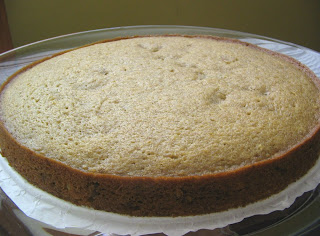 Now, back to the story at hand, I have heard of buttermilk being used in baking. For example, it is popularly used in pancake batter in Solvang, the former Danish town that acts as a gateway to Southern California's wine country. Whilst leafing through the (too?) many cookery books in my possession, I came across an interesting recipe in Tamasin Day-Lewis' Tamasin's Kitchen Bible. She, in turn, takes the recipe from Sally Clarke's repertoire. The only change I made was the substitution of pecans for walnuts, which I always seem to have on hand.
Sally Clarke's Buttermilk, Cinnamon and Pecan Cake
(from Tamasin Day-Lewis' Tamasin's Kitchen Bible)
8oz (225g) flour
salt
1 teaspoon ground cinnamon
5oz (140g) sugar
5oz (140g) light muscovado sugar
2oz (55g) pecans (or walnuts in my case), chopped
5 fluid oz (150ml) vegetable oil
1/2 teaspoon baking powder
1/2 teaspoon baking soda (bicarbonate of soda)
1 small egg
8 fluid oz (240ml) buttermilk
1) Heat oven to 325 F (170 C).
2) Mix flour with salt, cinammon, sugars, walnuts (pecans), and oil.
3) Mix in a separate bowl the baking powder, baking soda, egg, and buttermilk.
4) Add the buttermilk mixture to the flour mixture and combine until smooth.
5) Pour cake mix into a greased and lined tin and bake for approximately 40 minutes.
6) Test with a skewer, and if skewer is clean, then cool on a rack.
 I love watching the cake deflate as it is cooling on a rack. For me, this very moist cake has satisfied the sweet late-afternoon cravings, but do not understand this to mean it is tooth-achingly sweet, for it is not. I love the crunch of the walnuts, the mild spice of the cinnamon, but most of all the moistness that the combination of buttermilk and vegetable oil imparts.
 I had never heard of buttermilk before moving to the U.S., so I didn't know what to do with it. Upon its receipt, I recalled an episode of Barefoot Contessa in which Ina Garten marinated chicken pieces in buttermilk before lightly frying and oven-baking them. My angelheart Eric loves fried chicken, though he eats it infrequently, and he suggested we try it this healthier way. I pulled out Ina Garten's Barefoot Contessa Family Style and promptly set about making the chicken. The only adjustment I made was to the dredging flour to which, in addition to salt, I added Sichuan peppercorns and cumin. The quantities of the recipe serve 2-3.
Oven-Fried Chicken
(from Ina Garten's Barefoot Contessa Family Style)
1 chicken (1.5 pounds/almost 3/4 kg), or your favorite chicken pieces
1/2 quart buttermilk
1 cup all-purpose flour
1 tablespoon kosher salt
1 tablespoon freshly ground black pepper (we didn't use this on account of the Sichuan peppercorns)
2 tablespoons Sichuan peppercorns, ground
1 tablespoon cumin, lightly toasted then ground
vegetable oil
1) Place chicken pieces in a large bowl and pour buttermilk over them.
2) Cover with cling film and refrigerate overnight.
3) Preheat oven to 350 F (180 C).
4) Combine flour, salt, pepper, or Sichuan pepper and cumin in a bowl; this is the dredging flour.
5) Take chicken out of buttermilk and coat each piece in the dredging flour and put aside.
6) Pour oil into a large heavy-bottomed pot (to avoid the splashing of oil over stove top) to a depth of one inch. Heat up to 360 F (185 C).
7) In batches, place pieces of chicken in the oil and fry for about three minutes on each side.
8) Place chicken on a metal baking rack set on a baking sheet, or place chicken on very lightly oiled aluminum lined baking sheet (but the chicken pieces will not turn out as crispy).
9) When all the chicken is fried, bake for 30-40 minutes, until the chicken is no longer pink inside.
 In my humble opinion, if you do not add any herbs or spices to the dredging flour, then the chicken is pretty nondescript. The Sichuan peppercorns are quite lemony, and the cumin echoes that really well but on a lower, sort of background note, like a soothing double bass. They are great partners in crime for the dredging flour, giving the final product a little bite and a lot of soul.
The second recipe comes out a desire to enact a late-dawning realization: that I need a sweet hit in the late afternoon with my coffee. In my childhood this was known as afternoon tea. When I'd return home from a hard day at school (from primary right through to high school), there would be a homemade slice of cake or a cookie waiting for me. Once I was done with high school, I was pretty much done with afternoon tea - I was a grown up after all, or so I thought (but that's another story). In the last year or so I have noticed that I start craving for, what I thought was, something to eat at around 3pm. So, I'd just gorge myself on anything I could find: apples, bread, dried figs, walnuts...Sometimes the craving would be satisfied, sometimes it wouldn't. I slowly realized that it is a slice cake or a cookie, a hit of sweetness in a couple of bites, that satisfies the afternoon craving.
 Now, back to the story at hand, I have heard of buttermilk being used in baking. For example, it is popularly used in pancake batter in Solvang, the former Danish town that acts as a gateway to Southern California's wine country. Whilst leafing through the (too?) many cookery books in my possession, I came across an interesting recipe in Tamasin Day-Lewis' Tamasin's Kitchen Bible. She, in turn, takes the recipe from Sally Clarke's repertoire. The only change I made was the substitution of pecans for walnuts, which I always seem to have on hand.
Sally Clarke's Buttermilk, Cinnamon and Pecan Cake
(from Tamasin Day-Lewis' Tamasin's Kitchen Bible)
8oz (225g) flour
salt
1 teaspoon ground cinnamon
5oz (140g) sugar
5oz (140g) light muscovado sugar
2oz (55g) pecans (or walnuts in my case), chopped
5 fluid oz (150ml) vegetable oil
1/2 teaspoon baking powder
1/2 teaspoon baking soda (bicarbonate of soda)
1 small egg
8 fluid oz (240ml) buttermilk
1) Heat oven to 325 F (170 C).
2) Mix flour with salt, cinammon, sugars, walnuts (pecans), and oil.
3) Mix in a separate bowl the baking powder, baking soda, egg, and buttermilk.
4) Add the buttermilk mixture to the flour mixture and combine until smooth.
5) Pour cake mix into a greased and lined tin and bake for approximately 40 minutes.
6) Test with a skewer, and if skewer is clean, then cool on a rack.
 I love watching the cake deflate as it is cooling on a rack. For me, this very moist cake has satisfied the sweet late-afternoon cravings, but do not understand this to mean it is tooth-achingly sweet, for it is not. I love the crunch of the walnuts, the mild spice of the cinnamon, but most of all the moistness that the combination of buttermilk and vegetable oil imparts.
Labels: Afternoon Tea, buttermilk, Cake, Chicken, Ina Garten, Tamasin Day-Lewis
Friday, December 29, 2006
Quince in Syrup (and ramblings on quince not being a "nana fruit")
 I had intended on making another quince tart before the season was over, as it is now, but it just seems like the best way to do is by following Tamasin Day-Lewis' recipe in Simply the Best. I say this because getting it the way I wanted, more similar to the Dapple-Dandy Pluot Tart I made in August this year, is really only best for true stone fruit. Quince just require more work and the less handling of them, the better. So, I go on record, for failing to reify my imagined "ultimate quince tart". Having said that, and let this be a lesson to anyone who does not cook or bake for fear of not pulling it off, exploration is a hands-on way of learning, a necessity really, in the kitchen. I feel that I have explored the quince's options, and I am now even better able to spot the best ones at the farmers' market. So "failure", really, is only subjective in this sense and not entirely negative. But I turn with tail between the legs to Tamasin Day-Lewis - again - for her version of Quince in Syrup. This particular recipe is from her educational, hunger-inducing, and wide-reaching tome, Tamasin's Kitchen Bible.
My father all but cracked up laughing when I told him that I wanted to make this recipe. Why is it that people think quince is a nana's fruit? I suspect it has something to do with the Victorians leaving quince to scent linen cupboards, but this is originally, as far as I know, a Central Asian/Middle Eastern fruit, and the uses for it in jellies and as a sweet accent in savoury dishes are astounding (Central Asian and Middle Eastern dishes often act as harmonious offerings of the tart and sweet, the savoury and spicy - a dramatic study of balance). A nana fruit this is not. One does not or should not eat a quince directly off the tree, for it is incredibly hard and astringent. However, of the family of pears and apples it is, so like these fruit, it is best (in my opinion) cooked in any manner. It is once warmed through that the gorgeous tropical and floral aroma of the quince is released and casts spellbound gazes on all those whose olfactory organs are even minimally functioning.
Quince in Syrup
(from Tamasin Day-Lewis' Tamasin's Kitchen Bible)
juice of 1/2 lemon
8oz (225g) unrefined sugar
2lb (900g) quince (either 4 small or two really large ones) that have had the down scrubbed off them, halved (do not remove pips or stone) and sitting in acidulated water
1) Fill a pan with 1 3/4 pints (1 litre) boiling water and add lemon juice and sugar.
2) Add quince cut side down and simmer until tender (add more water as you go to keep them covered), anywhere between 20 and 60 minutes. Do not, however, let the fruit fall apart.
3) When tender, remove quince, and once cool enough to handle, cut out the cores and put them back in the pan.
4) Reduce the syrup by simmering.
5) Return quince to simmering liquid and cool until syrup becomes thick and reddish, approximately 75 minutes.
6) Arrange quice halves cut side up on a serving plate and pour syrup on top (it will turn into a jelly as it cools).
I do not dispute that this dessert takes a while before you can eat it, but it is worth it. Besides, you get to inhale that gorgeous aroma the entire time, and that cannot be bettered. Alas, the quince season seems to have ended here, so this will be my last quince entry for a while.
Labels: Quince, Tamasin Day-Lewis
Sunday, December 24, 2006
Tamasin Tart Bake Off: Bakewell Tart
 After much correspondence, Freya over at Writing At the Kitchen Table and I decided to do a Tart Bake Off. Not just any old tart, you understand, but one from one of Tamasin Day-Lewis' cookery books. This has prompted much salivation and, sadly, conserternation.
I was intrigued by the sound of the Bakewell Tart from Tamasin Day-Lewis' Tamasin's Kitchen Bible (a fabulous book that Freya recommended to me, by the way) on account of the jam (I chose an organic raspberry jam that I picked up from the farmers' market), bitter almond extract and ground almonds, which I absolutely adore in anything sweet or savoury. I was hesitant to make the shortcrust pastry because I had made it before for my first Quince Tart, but I didn't think much of it because it was too savoury for the quinces. I had intended to make the tart last night, but I had a few too many problems with the pastry. It was pretty hot in the kitchen, and this is not good for shortcrust pastry because it tears easily enough as it is. I think I tried three times to roll out the pastry and it either stuck (no matter how much flour I had on the counter, the rolling pin, and myself) or tore at every pass of the rolling pin. I threw the pastry out and started again tonight. I was miffed because the first time I tried it was successful (and rather breezy at that). Tonight, I made sure the kitchen was nice and cool - the pastry still tore a little bit, but it was easy enough to patch and then pass the rolling pin over again. After that though, the tart was a breeze to make.
Bakewell Tart
(from Tamasin Day-Lewis' Tamasin's Kitchen Bible)
Shortcrust pastry (for a 10" pan)
6.6 oz plain white four
pinch of sea salt
3.3 oz unsalted butter, directly from the fridge
1 teaspoon water, ice cold
Tart filling:
6.6 oz your favourite jam
4.4 oz unsalted butter
4.4 oz sugar
4.4 oz ground almonds
4 egg yolks
3 egg whites
1 teaspoon bitter almond extract
a handful of flaked almonds
For the pastry:
1) Pulse flour, butter and sugar in the blender until combined.
2) Add water.
3) Pulse until pastry comes together in a ball.
4) Refrigerate pastry for at least thirty minutes
5) Roll pastry out on a well floured surface (and on the rolling pin and your hands, too).
6) Line pastry in a pastry shell.
7) Put back in the fridge for at least thirty more minutes.
8) Prick surface with tines of a fork, cover with parchment paper and baking beans.
9) Cook in oven at 375 deg. f. for 15 minutes.
For the filling:
1) Preheat oven to 400 deg. f.
2) Spread a generous layer of jam on pastry base.
3) Melt butter until it smells nutty.
4) Whisk together egg yolks, egg whites, ground almonds, bitter almond extract, and sugar.
5) Pour butter into whisked mixture and combine.
6) Pour mixture over jam and bake in the oven for 25 minutes.
7) Strew over flaked almonds, then bake for a further 5 minutes.
Eat while still warm.
 Everyone liked this very simple tasting tart. It is perfect on a cold night as it would be at afternoon tea in the Summer. It reminded me of Louise cake, which my mum used to bake regularly when I was growing up. One barely notices the pastry because it is very thin and is really only meant to be there as a vessel of sorts for the glorious almond filling. I might try it with a more adventurous jam next time, say rhubarb and ginger.
Labels: Tamasin Day-Lewis, Tart
Monday, November 27, 2006
Poached Pears
 Poached pears are the perfect autumnal dessert. They can be poached in red wine or sugar syrup and cognac, and they can be served with a dollop of creme fraiche, with gingerbread, and, as my angelheart Eric and I often prefer, on their own.
Quite often I turn to Tamasin Day-Lewis for inspiration. Her Simply the Best offers fine seasonal recipes highlighting produce and meat at its prime. I have yet to make her Sticky Gingerbread, which she suggests be served with her vanilla and orange blossom water Poached Pears. After making Assabih bi Loz (Almond Fingers) in September, I was worried about using orange blossom water again. My angelheart Eric had said, in his tactful way, that it tasted like soap, and I was not even being heavy-handed. To my delight, he was keen to see how it would work with the pears.
This makes enough for four if accompanied by the sticky gingerbread (I will make it soon!), and is filling for two if served as is. I fiddled with the recipe on account of what we had on hand, so in parentheses find Tamasin's suggestions. We used bartlett pears, which have a tropical aroma that pairs well with citrus.
Poached Pears
(from Tamasin Day-Lewis' Simply the Best)
2/3 pint (400ml) water
2 1/4oz (67g) granulated sugar (vanilla caster sugar)
2 slices of lemon peel (and 2 slices of orange peel)
1 vanilla pod and its scooped-out seeds
2/3 tablespoon orange blossom water
4 firm but ripe pears, peeled, stalks left in, lightly coated with lemon juice to prevent oxidation
1) Make the sugar syrup by boiling the water and sugar with the lemon peel, vanilla pod, and vanilla seeds. Boil until thick, but do not let it turn brown.
2) Add orange blossom water and the pears.
3) Cook at a gentle simmer until pears are just tender when pierced with a skewer - roughly 20-25 minutes.
4) Leave to cool before serving.
The pears hold up really well to the lemon peel and orange blossom water. In fact, the orange blossom recedes a little in the flavor on account of the vanilla, though its aroma lingers. The most exotic of scents filled the kitchen as the pears were being poached; the most delicate of lemon and vanilla aromas wafted throughout the apartment. I look forward to accompanying poached pears with Tamasin's Sticky Gingerbread on a much colder night.
Labels: Pear, Tamasin Day-Lewis
Saturday, November 25, 2006
Thanksgiving
 Because this was going to be my last Thanksgiving in the U.S. for a while, I wanted to celebrate it twice. Well, I'm not sure that Thanksgiving is really a holiday for celebrating per se, but in the five years I've lived here, no one has given the traditional "let's be thankful for this, that and the other" speech, and no one appears to reflect on what one must be thankful for (the gas-guzzling? the waste in the landfills that we've created?). So, I'll just say here that I'm thankful for my experiences in the U.S. and the loved ones with whom I've been happy to share this period of time.
Mostly I'm just thankful for good food.

The first Thanksgiving meal was spent at our friend Suzanne's. It was especially glorious because our good friend, Ailene, celebrated with us (her husband has made the move out of state, and she is going to join him very soon), and Suzanne made turkey for the first time. She brined the 8 pound turkey for five hours before roasting it for a couple more hours. The baste consisted of butter, thyme, and lemon zest. Though there was no stuffing, the turkey's cavity was filled up with lemons and oranges, and they perfumed the succulent meat splendidly.
For my part, I made Roasted Root Vegetables with Honey, Balsamic Vinegar, and Fresh Goat Cheese and Pumpkin Pie with Candied Pepitas and Dried Fig and Coffee Ice Cream.
 For the vegetables, I wanted a twist on tradition. I have had a million variations of roasted vegetables - after all, I'm from New Zealand, a land where The Sunday Roast is an institution that harks back to New Zealand's colonial days. I wanted to make something with big flavours and lots of style. To accomplish both of these, I turned to my angelheart Eric's favorite celeb chef (and one of mine, too), Tyler Florence. His new cookery book, Tyler's Ultimate, builds on the theme of his Food Network show in which he creates contemporary twists on traditional fare (not always traditional in the American sense, either, for some of my favourite shows include his renditions of paella, lasagne, and English roast chicken).
Roasted Root Vegetables with Honey, Balsamic Vinegar, and Fresh Goat Cheese (from Tyler Florence's Tyler's Ultimate)
3 medium carrots, peeled and cut into two-inch long pieces (5.5 cm)
2 medium beets, peeled and cut into sixths
2 medium turnips, peeled and cut into sixths
2 fennel heads, outer leaves stripped and cut into quarters
3 shallots, unpeeled, cut in half lengthwise
1/4 cup olive oil
Kosher salt and freshly ground black pepper
1/4 cup honey
1/4 cup balsamic vinegar
4 oz chilled fresh goat cheese
1) Preheat oven to 350 deg. f. (195 deg. c.).
2) Toss vegetables with olive oil, salt and pepper on a baking sheet. Spread vegetables out in a single layer once done.
3) Roast vegetables for 25 minutes.
4) Whisk together honey and vinegar, then pour onto roast vegetables and toss them together.
5) Roast vegetables for 20 minutes, or until they are fork-tender and caramelized.
6) Top vegetables with pieces of goat cheese.
I had never had pumpkin pie before this Thanksgiving, and because I knew no one was going to make it, I wanted to take a risk and do it myself. Besides, if I failed, I was not concerned with not being invited to a Thanksgiving meal next year since I'd be back in New Zealand. Admittedly, I was very nervous. Who best to turn to other than the undisputed queen of the American lifestyle, Martha Stewart? The Martha Stewart Living, November 2006 magazine is really quite fabulous, and I was beaming when I came across her recipe. I don't know if most recipes call for the spices she does, but I was thrilled beforehand knowing the mellow depth they'd add, and I looked forward to making my own graham crust. As for the candied pepitas, I didn't even know what pepitas were, so I figured it was a good opportunity to find out. They are hulled pumpkin seeds - so now we all know.
Pumpkin Pie with Candied Pepitas
(From Martha Stewart Living, November 2006)
For the graham crust:
2/3 cups all-purpose flour
1/3 cup whole-wheat flour
1/4 cup ground pepitas
1/2 teaspoon salt
1/4 teaspoon ground cinnamon
1/2 cup (113g) unsalted butter, softened
1/3 cup light brown sugar, packed
1) Combine flours, pepitas, salt, and cinnamon (either with a whisk or in a food processor).
2) Add butter and sugar and proccess I did this in a bowl with my own hands, but you can do so with a food processor).
3) When dough comes together, put in a 9 or 10 inch single-crust metal pie plate (I actually put mine in my 10" fluted tart pan), and then freeze for 15 minutes.
For the filling:
1 1/2 cups canned solid-pack pumpkin (or 1 small sugar pumpkin roasted cut-side down at 425 deg. f./220 deg. c. for 50-60 minutes)
3 large eggs, lightly beaten
3/4 cup light brown sugar, packed
1 tablespoon corn starch
1/2 teaspoon salt
1/4 teaspoon ground allspice
pinch of cayenne pepper
pinch of ground clove
1 1/2 cups evaporated milk
1) Preheat oven to 350 deg. f. (180 deg. c.).
2) Bake crust (after it has been in the freeze for 15 minutes) until dry and golden brown - about 20 minutes - and then let cool completely.
3) Reduce oven temperature to 325 deg. f. (170 deg. c.).
4) Whisk pumpkin and eggs in a bowl.
5) In a separate bowl, combine brown sugar, cornstarch, salt, and spices.
6) Whisk dry ingredients into the pumpkin mixture.
7) Whisk in evaporated milk.
8) Tap firmly on counter to release air bubbles and let stand for 20 minutes.
9) Pour filling into graham crust; tap to release air bubbles.
10) Bake until set, approximately 50 minutes.
For the candied pepitas:
6 oz (2 cups) pepitas
5 tablespoons sugar (the recipe actually calls for 6 tablespoons)
1 large egg white, beaten
pinch of coarse salt, plus more for seasoning
pinch of ground allspice
pinch of cayenne pepper
1) Preheat oven to 350 deg. f. (180 deg. c.).
2) Stir ingredients together in a bowl.
3) Spread mixture in a single layer on a baking sheet lined with parchment paper.
4) Bake until pepitas are golden and slightly puffed, approximately 10 minutes.
5) Season with salt.
6) Stir gently, leaving some clumps.
7) Let cool completely in a bowl before storing in an air-tight container for up to three days. Sprinkle a small handful over pumpkin pie and save the rest for snacking :-)
 Of course, most people have cream on the side or on top of their pumpkin pie. I, of course, wanted something a little different. Tamasin Day-Lewis is very inspiring, and, like Nigella Lawson, has interesting dessert ideas. I was eager to make something from her latest book, Tamasin's Kitchen Classics,which is divided into the following sections: A Classic Start, the Main Course, Classic Cakes (interesting twists, such as Rhubarb and Ginger Crumble Cake and Upside-Down Pear and Spice Cake), A Classic Finish (desserts, such as Redcurrant Curd Ice Cream and Black Forest Trifle) and Basics (stocks and pastries). It is a gorgeous and hunger-inducing book - my latest "must have". Tamasin's Dried Fig and Hazelnut Ice Cream sounded like too much of a dream to pass up, especially since I had good organic dried figs on hand. I omitted the praline and substituted the vanilla base for one of coffee).
Dried Fig and Coffee Ice Cream
(Adapted from Tamasin Day-Lewis' Tamasin's Kitchen Classics)
9 large, whole dried organic figs
3 tablespoons squeezed orange juice
2 tablespoons cognac
1 cup whole milk, well chilled
3/4 cup granulated sugar
3 tablespoons instant espresso or coffee
2 cups heavy (double) cream
1 teaspoon pure vanilla extract
1) Chop the figs into small dice and soak them in the orange juice and cognac for 4-6 hours.
2) In a medium bowl, whisk to combine milk, sugar and espresso powder until sugar and powder are dissolved.
3) Stir in the cream and vanilla extract.
4) Put into ice cream maker with the liquid that the figs have not absorbed.
5) Once churned, fold figs pieces into the ice cream and freeze.
 For the second Thanksgiving dinner, we ate at my angelheart's sister's with his mother, brother-in-law, and two-and-a-half-year-old nephew. On the menu were cornish game hens stuffed with bulgur wheat, raisins, and pine nuts (which you can read about here), sauteed spinach with garlic, and prosciutto-wrapped scallops and shrimp. Eric's sister's dessert didn't quite turn out, but she made Lemon Madelines during the day. It is a recipe from Martha Stewart's Baking Handbook, and I'm tempted to make them in the future because they were simultaneously fluffy and substantial, and the combination of almond and lemon in heavenly.
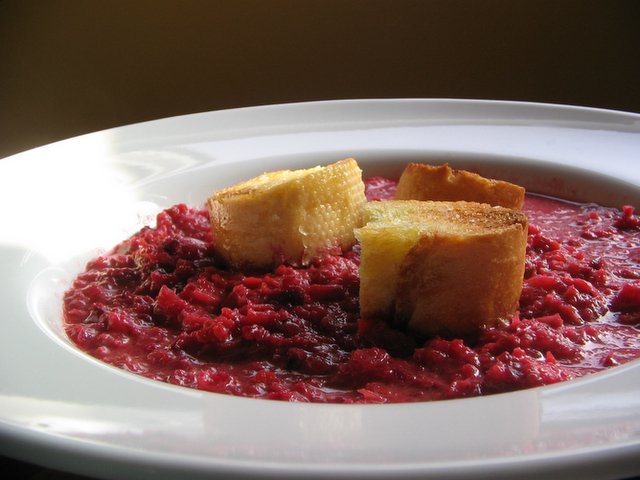
As for leftovers, today I made soup out of the Roasted Root Vegetables by blending the vegetables with some hot chicken stock and seasoning, topped with croutons that were rubbed with garlic.
Happy Post-Thanksgiving everyone!
Labels: Holidays, Ice cream, Martha Stewart, Pie, Pumpkin Pie, Tamasin Day-Lewis, Thanksgiving, Tyler Florence
Friday, October 27, 2006
Quince Tart
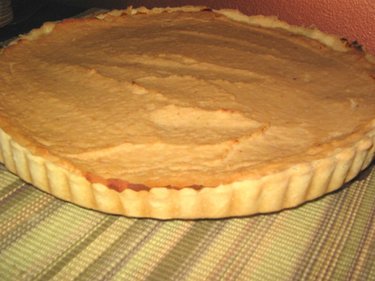 My angelheart Eric had never had quince before I made this tart. I really wanted to give him an introduction to a fruit I really love, and I wanted to use a recipe from my collection of teachers (i.e. a plethora of cookery books). Tamasin Day-Lewis' recipe for Quince Tart from Simply The Best: The Art of Seasonal Cooking, a mouth-watering collection of seasonal recipes punctuated with articles from the weekend edition of Daily Telegraph seemed to fit the bill...
Except I didn't know what a shortcrust pastry was. Tamasin Day-Lewis' instructions were simply to make one with 4oz (113g) organic flour and 2oz (57g) unsalted butter. And then what? Well, I really didn't know. I got the impression that one just combined these two ingredients together until they created a crumble, and then they were to be pressed into the tart pan, but I was not sure. I did a quick search online and found a simple recipe in which water and salt were included, as well as twice the amount of flour and butter. I decided to follow that recipe, but a couple of days later, while reading Hugh Fearnley-Whittingstall's The River Cottage Year, I realised that my initial thoughts were right - he refers to a shortcrust recipe suggested by Elizabeth David - except that I had not considered a drop or two of water to bring the mixture together. Tamasin Day-Lewis seems to admire Elizabeth David, so she probably did mean for me to think about this method. Now I know. But today I give you the recipe I ended up following, which was fine, except I should have added some sugar because the pastry ended up being too savoury for this dessert.
As for the quince themselves, a kind of mousse is made, which I think masks the gorgeous tropical scent of the fruit. It was a nice and fluffy tasting tart, but it did not bring out of the quince their quince-ness.
Quince Tart
(Adapted from Tamasin Day-Lewis' Simply The Best: The Art of Seasonal Cooking)
For the shortcrust pastry:
9oz (255g) flour
4oz (113g) butter
1 egg, chilled
1 pinch salt
1 tablespoon water, chilled
1) Process flour, butter, and salt in a food processor until the mixture looks crumbly.
2) Whisk the egg and water in a bowl until combined, then add to the flour mixture while food processor is running. Process until dough forms large clumps.
3) Turn dough out on to work surface and knead gently to bring together.
4) Form into a disk, wrap in plastic, and refrigerate overnight or for at least two hours.
For the filling:
5 quince, peeled, cored, and cubed
2 tablespoons water
2 tablspoons vanilla superfine sugar (vanilla caster sugar)
2 egg yolks
3 egg whites
2oz (50g) butter
1) Preheat oven to 375 deg. f. (190 deg. c.).
2) Line a 10" (25cm) tart with the shortcrust pastry.
3) Stew quince gently in a covered pan in the water and sugar until tender.
4) Liquidise quince in a food processor, test for sweetness before adding egg yolks, butter, and cream, then give it a quick whirl in the processor. Scrape mixture into a bowl.
5) Whisk the egg whites to stiff peaks in a separate bowl, then fold them into the quince mixture lightly and quickly.
6) Pour the quince mixture over the pastry base.
7) Cook for approximately 35 minutes, until well risen and "airily set". Serve warm.
Next time I make this, and there probably will be another time as quince are still in season, I will poach the quince with their cores in because this is what creates that gorgeous pink hue quince are known for as well as a "jelly"). I will then scoop them out, slice them, and then arrange them in the tart pan to bake. This way, I think I will get that quince-ness I'm after.
Labels: Quince, Tamasin Day-Lewis, Tart